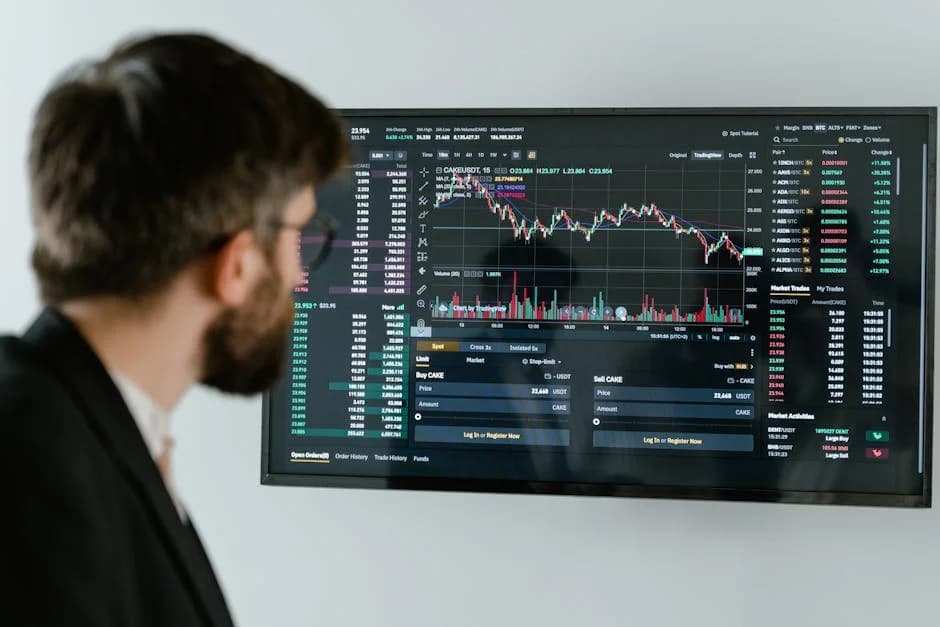
The Complete Guide to Automating Trading with AI: From Setup to Advanced Strategies Across All Asset Classes
Markets never sleep, and neither do the algorithms reshaping how we trade. If you’ve ever wondered whether you could automate trading with AI to capture opportunities around the clock, you’re asking the right question.
This guide is your complete walkthrough, from your first bot setup to advanced strategies that work across stocks, crypto, forex, and more.
We’ll cut through the hype and give you a practical, no-nonsense path. You’ll learn what AI trading actually is, which technologies power the bots, how to pick a platform, and how to manage risk when you hand over some control to code.
By the end, you’ll have the blueprint to build, test, and refine an automated trading system that fits your goals, not someone else’s template.
What Is AI Trading and How Does It Work?
Automating trading with AI represents a fundamental shift from discretionary decision-making to data-driven execution. Instead of relying on gut feelings or manual chart analysis, traders deploy algorithms that learn from historical and real-time market data.
These systems identify patterns, predict price movements, and place orders in milliseconds, often across multiple asset classes simultaneously. The result is a disciplined approach that removes emotional bias and can operate around the clock, something no human trader can match.
 Save
SaveHow AI Trading Works
The typical AI trading pipeline starts with data ingestion, where the system consumes price feeds, news sentiment, and economic indicators. Machine learning models then analyze this information to generate trading signals.
For day traders, these signals might trigger dozens of trades per session, while longer-term strategies may only fire a few times a month. The beauty of modern platforms is that you can tailor the AI’s behavior to your preferred style, whether that’s scalping or swing trading.
In fact, AI-powered day trading strategies have become particularly popular because they can react to intraday volatility faster than any manual approach.
Before going live, any responsible trader backtests their AI model against years of historical data to gauge performance. This step is crucial because it reveals how the strategy would have fared in different market regimes.
Once deployed, the bot continues to adapt, but it’s not infallible. Market conditions evolve, and models can drift.
That’s why ongoing supervision remains essential, even with the most sophisticated AI. The technology handles the heavy lifting, but the trader still sets the rules, defines risk parameters, and steps in when anomalies occur.
Important
AI trading isn’t a ‘set and forget’ solution. Even the most advanced bots require regular monitoring, strategy adjustments, and risk management oversight to adapt to changing market conditions.
Understanding the core mechanics is just the start. The real power comes from the specific AI technologies that drive these bots, which we’ll explore next.
Key AI Technologies Powering Trading Bots
Modern trading bots rely on a stack of AI technologies that work together to analyze markets, predict price movements, and execute trades. Machine learning models form the backbone, learning from historical data to identify patterns that repeat.
But the real power comes from combining multiple approaches, each handling a different aspect of the trading problem.
Machine Learning and Deep Learning Models
Supervised learning algorithms like random forests and gradient boosting are commonly used for classification tasks, such as predicting whether a stock will go up or down. These models ingest technical indicators and price history, then output a probability score.
More advanced bots use deep learning architectures like LSTMs and transformers, which can capture long-range dependencies in time-series data far better than traditional models. A well-tuned LSTM can detect subtle momentum shifts that simpler indicators miss, giving the bot an edge in fast-moving markets.
Unsupervised learning also plays a role in clustering assets with similar behavior or detecting regime changes. For example, a bot might use k-means clustering to group stocks by volatility profile, then apply different strategies to each cluster.
This adaptability is crucial because a strategy that works in a trending market can fail in a sideways one. By recognizing the current market regime, the bot can switch tactics without human intervention.
Natural Language Processing (NLP) and Sentiment Analysis
NLP technologies allow bots to read and interpret news articles, earnings reports, and social media chatter in real time. Models like BERT and GPT are fine-tuned on financial text to extract sentiment scores and event triggers.
A bot might scan thousands of headlines per second, flagging any mention of a merger or a CEO change, then adjust positions before the broader market reacts. This speed advantage is impossible for a human trader to match.
Sentiment analysis goes beyond simple positive/negative classification. Advanced systems detect sarcasm, quantify the intensity of language, and even track the credibility of the source.
For instance, a bot might weigh a tweet from a verified company account differently than a random rumor. Integrating this layer with technical signals creates a more holistic trading signal that reduces false positives.
The challenge is latency and noise. Financial text is dense with jargon and rapidly changing context, so models must be continuously retrained.
Some bots use reinforcement learning to optimize the timing of news-based trades, learning when to act immediately and when to wait for confirmation. This adaptive approach helps avoid whipsaws during high-volatility events like FOMC announcements.
Combining these AI technologies is what turns a simple script into a robust automated trading system. Each component addresses a specific weakness of human traders: speed, consistency, and the ability to process vast information.
As you explore automating trading with AI, understanding this technology stack will help you choose the right tools and avoid black-box solutions that hide their logic.
Benefits of Automating Trading with AI
Emotion-Free Execution
Automate trading with AI to strip emotion from every decision. Fear and greed cause even experienced traders to exit winners too early or hold losers too long.
An AI bot follows its programmed rules without hesitation, executing entries and exits based purely on data. This consistency removes the psychological rollercoaster that undermines manual trading.
 Save
SaveDiscipline becomes automatic when a bot handles the heavy lifting. You no longer chase price spikes or revenge trade after a loss.
The system sticks to the plan, session after session, which is especially valuable during high-volatility events when human judgment often fails.
Speed, Consistency, and 24/7 Operation
AI-powered automation scans dozens of markets simultaneously, spotting opportunities in milliseconds. Manual traders simply cannot match that processing speed.
A bot can monitor multiple asset classes around the clock, executing trades while you sleep or focus on higher-level strategy refinement.
Backtesting and forward testing become seamless with automated trading with AI. You can validate strategies against years of historical data in minutes, then deploy the same logic live without translation errors.
This consistency across testing and execution builds confidence in your edge. The bot never gets tired, never misses a signal, and never deviates from the rules you set.
Common Mistake
Many traders assume that automating with AI guarantees profits. The real benefit is consistency, not magic. Even the best bots need regular check-ins to ensure they align with current market conditions.
Risks and How to Mitigate Them
Automating trading with AI offers immense potential, but it also introduces risks that can wipe out capital if ignored. The same algorithms that spot micro-patterns invisible to humans can also amplify losses at machine speed.
Many traders learn this the hard way after deploying a bot that worked perfectly in backtests but crumbled in live markets. Understanding these pitfalls before you go live is not optional.
 Save
SaveKey Risks of Automated Trading
Overfitting is the most common trap. A model that memorizes every noise and anomaly in historical data will look flawless on a chart but fail on new, unseen price action.
Data snooping and survivorship bias also creep in when you test on the same dataset too many times. Beyond statistical flaws, AI-driven trading systems face sudden market regime shifts.
A bot tuned for low-volatility bull runs may hemorrhage cash during a flash crash. Technical failures add another layer: a dropped internet connection, an API outage, or a bug in your execution logic can leave positions unmanaged at the worst moment.
Strategies to Mitigate AI Trading Risks
Rigorous out-of-sample testing and walk-forward analysis are your first line of defense. Instead of optimizing once and forgetting, you continuously retrain on a rolling window of data and validate on the subsequent period.
This mimics real-world deployment and exposes overfitting early. Diversification across uncorrelated assets and strategies also blunts the impact of any single model failure.
For every AI trading bot you run, set hard limits on position size, daily drawdown, and maximum consecutive losses. These circuit breakers stop the damage before it compounds.
Pro Tip
Always implement a manual override or kill switch that instantly halts all automated trading activity. A runaway algorithm can drain an account in minutes, and no backtest will save you from a live-loop bug.
Finally, monitor everything. Even the best automated trading with AI requires human oversight. Set real-time alerts for unusual activity, and review performance weekly.
The goal is not to eliminate risk but to shrink it to a level your account can survive. Next, we will compare the top platforms that bake many of these safeguards directly into their infrastructure.
Top AI Trading Platforms Compared
Selecting the right platform is the single most important decision you’ll make when you automate trading with AI. Each tool comes with its own strengths, and what works for a day trader might be completely wrong for a long-term investor.
I’ve spent hours testing these platforms, and the differences in execution speed, asset coverage, and AI transparency are massive. Don’t just pick the one with the flashiest dashboard.
 Save
SaveTo help you cut through the noise, here’s a side-by-side comparison of four popular AI trading platforms.
| Platform | AI Technology | Best For | Starting Price |
|---|---|---|---|
| Trade Ideas | AI pattern recognition with real-time scanning | Active day traders seeking breakout signals | $118/month |
| TrendSpider | Automated charting and multi-timeframe analysis | Technical traders who rely on support/resistance | $39/month |
| Tickeron | AI trend prediction and pattern search engine | Swing traders and beginners | $20/month |
| Kavout | Machine learning scoring (K Score) for stock ranking | Quantitative and value-oriented traders | $49/month |
Beyond the feature lists, the real test is how a platform handles your specific trading style. A platform built for equities might struggle with crypto volatility, and a tool optimized for technical patterns won’t help if you’re trading news events.
I always recommend starting with a paper trading account to see how the AI’s signals translate into real-world fills. Once you’ve found a match, the next step is getting your first bot up and running, which we’ll cover in detail.
Step-by-Step Guide to Setting Up Your First Bot
Setting up your first AI trading bot feels intimidating, but breaking it down into clear steps makes the process manageable. Most traders who successfully automate their trading with AI follow a proven sequence: pick a platform, define a strategy, backtest relentlessly, and then go live with small capital.
This approach works across stocks, forex, crypto, and futures, so you can apply the same framework regardless of your preferred market.
 Save
SaveSelecting a Platform and Linking Your Broker
Platform selection hinges on a few non-negotiable criteria. You need native support for your asset class, a straightforward API or broker integration, and a backtesting engine that lets you validate ideas without coding from scratch.
Many AI trading platforms now offer drag-and-drop strategy builders alongside pre-trained models, which dramatically shortens the learning curve for your first bot.
After connecting your brokerage account via secure API keys, double-check that the platform enforces read-only access by default. A common mistake is granting full trading permissions before you have tested the bot’s behavior.
Start with paper trading or a sandbox environment to confirm that order execution matches your expectations before risking real money.
Configuring Your Strategy and Validating with Backtesting
Strategy configuration is where your market intuition meets the AI engine. Most platforms let you set entry and exit conditions based on technical indicators, price action patterns, or even sentiment scores pulled from news feeds.
The key is to keep your first AI trading bot simple: one or two clear signals with fixed position sizing and a hard stop-loss. Complexity can be layered on later after you understand how the automation behaves in different volatility regimes.
Backtesting reveals whether your logic holds up historically, but it also exposes the danger of curve-fitting. Run your strategy across multiple time periods and market conditions, paying close attention to drawdowns and win rate consistency.
If the equity curve looks too perfect, you have probably over-optimized. A robust automated trading with AI setup should perform decently out-of-sample, not just on the data it was trained on.
Going live marks the transition from theory to execution, and it demands a monitoring routine. Deploy your bot with a fraction of your intended capital, then watch its behavior during both high-impact news events and quiet sessions.
Even the best AI models drift over time, so schedule weekly performance reviews and be ready to pause the bot if market dynamics shift. From here, you can explore advanced strategies to refine your edge and scale up confidently.
Performance Metrics That Matter
Evaluating an AI trading bot requires more than just looking at the bottom line. The real story lies in a handful of metrics that reveal how the system behaves under pressure, how consistent its edge is, and whether it can survive the next market shock.
If you want to automate trading with AI successfully, you need to know which numbers separate a robust strategy from a lucky backtest.
 Save
SaveMost platforms will show you a profit curve, but that can be misleading without context. A bot that doubled an account in six months might have taken on insane risk to get there.
The table below breaks down the four metrics that give you a clear, no-nonsense view of performance.
| Metric | What It Measures | Healthy Range |
|---|---|---|
| Sharpe Ratio | Risk-adjusted return; higher means more return per unit of risk | Above 1.0 is good; above 2.0 is excellent |
| Maximum Drawdown | Largest peak-to-trough decline in equity | Below 20% for conservative bots; up to 30% for aggressive ones |
| Win Rate | Percentage of trades that are profitable | 40–60% is typical for trend-following; above 70% may indicate overfitting |
| Profit Factor | Gross profit divided by gross loss; values >1 indicate net profitability | 1.5 or higher is desirable; above 2.0 is strong |
These metrics work together to paint a complete picture. A high Sharpe ratio with a deep max drawdown suggests the bot is profitable but vulnerable to rare, catastrophic events.
A win rate above 70% might look great, but if the average loss is three times the average win, the profit factor will tell the truth. Always cross-reference at least three of these before you trust an AI trading system with real capital.
Tax and Legal Considerations for Automated Traders
Most traders focus so intently on strategy performance that tax and legal obligations become an afterthought. That oversight can cost you real money and even put your trading activity at risk.
When you automate trading with AI, the rules don’t disappear. In fact, high-frequency execution and complex logic often trigger additional scrutiny from tax authorities and financial regulators.
 Save
SaveTax Implications of AI Trading
Every trade your bot makes is a taxable event, and the IRS treats automated trading no differently than manual trading. Profits are typically classified as short-term capital gains, taxed at your ordinary income rate, unless you hold positions for over a year.
If your AI-driven system trades frequently, you may be considered a business rather than an investor, which opens the door to deductions for software, data feeds, and home office expenses but also subjects you to self-employment tax. Wash sale rules apply equally to automated trading with AI, so a bot that repurchases a security within 30 days of selling at a loss can disallow that loss for tax purposes.
Many full-time algorithmic traders elect mark-to-market accounting under Section 475 to avoid wash sale headaches and convert capital gains into ordinary income, which allows full loss deductions but requires meticulous record-keeping.
Regulatory and Legal Compliance
Regulators like the SEC and CFTC don’t care whether a human or an algorithm placed the order. Any trading activity that manipulates markets, such as spoofing or layering, remains illegal regardless of whether an AI model generated the idea.
If you’re trading only your own capital, you generally don’t need a license, but if your bot manages funds for others or you charge subscription fees for trade signals, you may need to register as a Commodity Trading Advisor (CTA) or investment adviser. Brokerage firms also have their own rules for algorithmic order flow, and some require pre-approval of automated strategies.
A specific example: pattern day trader rules still apply, so if your AI trading automation executes four or more day trades in a five-day period in a margin account, you must maintain at least $25,000 in equity. Ignoring these legal boundaries can lead to account restrictions or enforcement actions, even when the violations were unintentional.
Open-Source vs. Commercial Solutions
Choosing between open-source and commercial AI trading platforms shapes everything from your upfront costs to how much control you have over the algorithms. When you set out to automate trading with AI, this decision determines whether you’ll spend more time coding or configuring.
The right path depends on your technical skills, budget, and how much customization your strategy needs.
Open-Source AI Trading Solutions
Open-source tools give you complete access to the underlying code. You can modify every aspect of the trading logic, from data ingestion to order execution.
This level of control attracts developers and quantitative traders who want to build fully custom systems. However, the learning curve is steep.
You’ll need to handle infrastructure, security, and ongoing maintenance yourself. Many successful automated trading with AI setups start from frameworks like TensorTrade or backtrader, but they demand significant time investment.
 Save
SaveCommercial AI Trading Solutions
Commercial platforms offer a polished, ready-to-use experience. These services handle the heavy lifting of data processing, model training, and execution, often through a simple web interface or API.
They’re designed for traders who prefer to focus on strategy rather than code. The trade-off is less flexibility.
You’re limited to the features and integrations the provider offers. Still, for many, the speed of deployment and dedicated support make commercial AI trading automation a practical choice.
| Aspect | Open-Source | Commercial |
|---|---|---|
| Cost | Free or low-cost (self-hosted) | Subscription or license fees |
| Customization | Unlimited (full code access) | Limited to platform features |
| Ease of Use | Requires programming skills | User-friendly, often no-code |
| Support | Community forums, documentation | Dedicated support teams |
| Maintenance | Self-managed updates and bug fixes | Vendor handles updates |
| Data Handling | You source and clean data | Integrated data feeds |
No matter which route you choose, the goal remains the same: to automate trading with AI effectively. Once you’ve settled on a platform type, the next step is to explore advanced strategies that can give you an edge.
In the following section, we dive into sentiment analysis and reinforcement learning techniques that push AI trading even further.
Advanced Strategies: Sentiment Analysis and Reinforcement Learning
Sentiment Analysis for Trading
Market-moving news travels faster than any human can parse. Sentiment analysis uses natural language processing to scan headlines, earnings call transcripts, and social media chatter, then distills it all into a bullish or bearish signal.
Many traders think this is just about counting positive and negative words, but modern models detect sarcasm, context shifts, and even the credibility of the source. That nuance is what separates a toy indicator from something you can actually automate trading with AI.
 Save
SaveBuilding a reliable sentiment pipeline means feeding the model with financial-domain data, not generic text. A model trained on movie reviews will miss the significance of a phrase like “the company beat lowered expectations.” You also need to account for the speed of news propagation: a tweet from a CEO might move the price in seconds, while an analyst downgrade takes longer to be absorbed.
Blending real-time sentiment scores with price-volume data often gives a sharper entry signal than either alone.
Common Mistake
Sentiment models are only as good as the data they’re trained on. Using off-the-shelf NLP tools without fine-tuning on financial text will give you signals that look insightful but fail to capture the real nuance of market language.
Sentiment alone won’t make you profitable, but it adds a layer of context that pure technical analysis lacks. The trick is to treat it as a confirmation filter: if your trend-following bot gets a buy signal and the sentiment score is above a certain threshold, the trade has higher conviction.
This kind of rule-based integration is straightforward to code in most AI trading platforms and avoids overcomplicating the decision logic.
Reinforcement Learning in Trading
Reinforcement learning flips the script on traditional backtesting. Instead of optimizing a static strategy on historical data, an RL agent learns by interacting with a simulated market environment.
It tries an action, gets a reward or penalty, and gradually discovers policies that maximize long-term profit. This is how you automate trading with AI in a way that adapts to regime changes rather than memorizing past patterns.
Designing the reward function is where most projects go wrong. A naive approach might reward every profitable trade equally, but that encourages scalping tiny gains and ignoring risk.
A better reward signal incorporates the Sharpe ratio or penalizes drawdowns, nudging the agent toward smoother equity curves. The environment also needs realistic transaction costs, slippage, and liquidity constraints, otherwise the agent learns tricks that fail in live markets.
Combining sentiment features with an RL agent creates a powerful feedback loop. The agent can learn to weigh sentiment signals differently depending on market volatility or time of day.
For example, it might ignore Twitter sentiment during low-liquidity hours but lean on it heavily around earnings announcements. This dynamic weighting is nearly impossible to hand-code, which is why RL is so compelling for advanced AI trading strategies.
Future Trends in AI Trading
The next generation of AI trading moves far beyond simple pattern recognition and backtesting. Real-time adaptive systems that learn from every tick of market data are already emerging, and they promise to automate trading with AI in ways that feel almost intuitive.
Instead of static rules, these models continuously refine their understanding of market microstructure, reacting to shifts in volatility, liquidity, and order flow as they happen. The result is a trading engine that doesn’t just execute a plan,it evolves one.
 Save
SaveGenerative AI and large language models are reshaping how traders interact with data. Rather than poring over charts, traders can now ask natural-language questions about market conditions and receive instant, context-rich summaries.
These models also power autonomous strategy generation, where a system proposes and tests new trading ideas based on real-time news, earnings calls, and even social media sentiment. The line between human oversight and machine creativity is blurring fast.
Decentralized AI trading on the blockchain represents another frontier. Smart contracts can now host AI agents that manage liquidity pools, execute arbitrage, and rebalance portfolios without any central authority.
Meanwhile, regulators are beginning to craft frameworks for algorithmic accountability, which will shape how these autonomous systems operate. Staying ahead means not just adopting new tools, but understanding the shifting landscape of trust and transparency that will define the next decade of automated trading with AI.
FAQ
Can AI trading bots consistently beat the market?
No bot can guarantee consistent market-beating returns because markets are unpredictable. However, well-trained AI models can identify high-probability setups and manage risk far more efficiently than manual traders. The real edge comes from compounding small, disciplined wins over time rather than chasing home runs.
Do I need programming skills to automate trading with AI?
Not necessarily. Many platforms offer visual strategy builders and pre-trained AI models that require no code at all. If you want to customize deep learning models or integrate alternative data, some Python knowledge helps, but it’s optional for most retail traders.
What’s the minimum capital needed to start AI trading?
You can start with as little as $500 on some platforms, but $2,000 to $5,000 gives you more flexibility to diversify across assets. The key is to only trade with money you can afford to lose and to scale up gradually as your bot proves itself.
How do I backtest an AI trading strategy properly?
Use at least two years of historical data and include different market regimes like bull, bear, and sideways periods. Watch out for overfitting: if your bot nails the past but fails in live markets, it probably memorized noise. Walk-forward testing and out-of-sample validation are essential.
Are there any free AI trading bots that work?
Some open-source frameworks like Freqtrade or Gekko are free and functional, but they require technical setup. Free versions of commercial bots usually come with limited features or delayed data. They can work for learning, but serious traders often upgrade for reliability and speed.
How can I automate trading with AI on a small budget?
Start with a commission-free broker that supports API trading and pair it with a low-cost or open-source AI bot. Focus on one liquid asset like SPY or BTC to keep data costs down. Reinvest profits slowly and avoid over-leveraging, which is the fastest way to blow a small account.
Share this article


Staff Writer
adminRelated Articles


5 Colorful Towns in Portugal You Must Visit
Discover 5 colorful towns in Portugal hidden from tourist crowds. From Monsaraz to Piódão, explore vibrant villages with authentic local charm. Plan your trip now!

7 safest caribbean islands
Discover the 7 safest Caribbean islands with crime data, hurricane risk, and traveler-specific tips. Plan your secure vacation with confidence today!

Italy travel guide for families with kids
Traveling to Italy with children? Get expert tips on kid-approved attractions, stroller-friendly routes, and family hotels. Make unforgettable memories!

Italy Travel Guide
Plan your dream Italy trip with our ultimate guide. Insider tips, budget breakdowns, cultural dos and donts, month-by-month advice. Avoid tourist traps! Start planning.