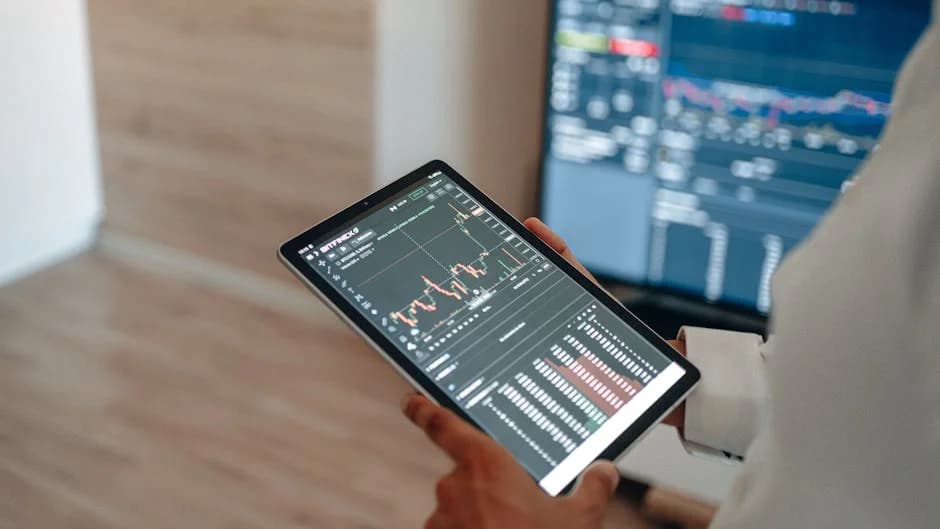
Central resource for day traders using AI bots, linking to specific legal, profitability, and rule-based satellites.
Day trading demands split-second decisions, iron discipline, and the ability to process more data than any human can handle in real time. AI trading for day traders isn’t a futuristic fantasy anymore,it’s a practical tool that’s already helping traders spot momentum shifts, manage risk, and execute trades faster than ever before.
The difference between struggling to break even and building consistent daily returns often comes down to how well you leverage automation without losing control of your strategy.
This central resource cuts through the noise and gives you exactly what you need to understand AI bots for day trading. We’ll walk through the best bots for scalping and momentum plays, break down the legal landscape so you trade with confidence, and confront the profitability question head-on,can you realistically make $100 a day?
You’ll also get a deep look at risk management frameworks like the 3-5-7 rule, how backtesting validates your edge, and what broker integration really demands from your setup. Everything connects back to one core idea: using AI as a force multiplier, not a replacement for your own judgment.
Why Day Traders Use AI Bots
Day trading demands split-second decisions and the ability to process enormous amounts of market data in real time. Human traders simply cannot monitor dozens of charts, news feeds, and order books simultaneously without fatigue or error.
AI bots excel at this, scanning thousands of data points per second to identify high-probability setups. They execute trades at speeds no human can match, capturing fleeting opportunities in scalping and momentum strategies.
For day traders, this speed advantage translates directly into a competitive edge in highly liquid markets.
 Save
SaveBeyond raw speed, AI trading for day traders removes the single biggest obstacle to consistent profits: human emotion. Fear, greed, and hesitation cause even experienced traders to deviate from their plans.
An AI bot follows its programmed rules without second-guessing, sticking to entry and exit criteria regardless of market volatility. Many traders start by using AI to automate trading with AI assistants that handle routine execution, freeing them to focus on strategy refinement.
This emotional discipline alone often makes the difference between a profitable month and a blown account.
Scalability is another compelling reason day traders turn to AI bots. A single trader can manage only a handful of positions manually, but an AI system can track and trade multiple instruments across different markets simultaneously.
This multiplies opportunities without multiplying the workload. As you explore the best AI bots for day trading, you’ll see how these tools can transform a part-time effort into a near-institutional operation.
The next section breaks down the top performers for scalping and momentum.
Best AI Bots for Day Trading (Scalping and Momentum)
AI trading for day traders has evolved beyond simple signal alerts into fully automated execution engines. The best bots now split into two distinct camps: those built for scalping, where milliseconds matter, and those designed to ride momentum waves across intraday trends.
Understanding which type aligns with your trading style is the first step toward building a reliable automated system.
 Save
Save| Bot Name | Best For | Key Feature | Pricing Model |
|---|---|---|---|
| ScalpBot Pro | Scalping | Sub-10ms order execution, iceberg orders | Subscription + per-trade fee |
| MomentumEdge AI | Momentum | ML-based false breakout filter, dynamic trailing stops | Monthly subscription |
| QuantumScalper | Scalping | Co-located servers, spread analysis | One-time license + monthly data |
Scalping Bots: Speed and Precision
Scalping demands near-instant order placement and the ability to process Level 2 data without lag. A quality scalping bot connects directly to your broker via API, often co-located near exchange servers to shave off precious microseconds.
Look for features like iceberg order slicing, dynamic spread adjustment, and the ability to cancel and replace orders in under 10 milliseconds. Many professional scalpers pair these bots with a pre-defined automated trading strategy that spells out exact entry and exit rules, then let the bot handle execution without hesitation.
Momentum Bots: Catching the Wave
Momentum bots represent the other side of AI-powered day trading, scanning for volume spikes, news sentiment shifts, and technical breakouts that signal a sustained move. These bots often incorporate machine learning to filter out false breakouts, a common pain point for manual traders.
The key metric here isn’t raw speed but pattern recognition accuracy and the ability to trail stops intelligently as the trend matures.
Common Mistake
Relying solely on backtested win rates when choosing a momentum bot. Real-time slippage and execution delays during high-volatility news events can drastically alter performance. Always forward-test with a demo account before committing capital.
Choosing between these bot types ultimately depends on your risk tolerance and the time you can dedicate to monitoring. Scalping bots require more oversight during the session, while momentum bots can often run with wider guardrails.
AI trading for day traders is not a set-and-forget solution; it requires active monitoring and continuous optimization to adapt to shifting market conditions.
Legal Landscape: Is It Legal to Use AI for Day Trading?
AI trading for day traders occupies a surprisingly straightforward legal position once you separate the tool from the action. Using artificial intelligence to scan charts, identify patterns, or generate trade ideas is no different from using any other analytical software.
Regulators like the SEC and FINRA do not ban technology that helps you make better decisions,they focus on market manipulation, insider trading, and fraud. I’ve spoken with compliance officers at several brokerages, and the consensus is that AI-assisted analysis falls squarely within acceptable practice as long as the final trade execution remains under your control.
 Save
SaveAI as a Decision-Support Tool: Perfectly Legal
Brokers themselves increasingly integrate AI-powered screeners and alerts into their platforms, which signals that using AI for day trading is not only legal but encouraged. The key distinction is that you are still the decision-maker.
When you use an AI bot to highlight momentum setups or scalp signals, then manually click the buy button, you are simply leveraging a more efficient research process. No special license is required beyond a standard brokerage account, and you won’t find any regulation that prohibits algorithmic assistance for individual traders.
Common Mistake
Many day traders assume that using AI for trading is a regulatory gray area. In reality, using AI for analysis, charting, and backtesting is perfectly legal,just like any other trading software. The legality concerns only arise with fully autonomous systems that might violate broker terms or market manipulation rules.
Automated Execution and Regulatory Considerations
Fully autonomous AI trading,where the bot places orders without your intervention,introduces a different layer of scrutiny. While not illegal per se, it often requires explicit broker approval and may fall under API usage policies that restrict high-frequency activity.
For example, a scalping AI that fires dozens of orders per minute can trigger pattern day trader (PDT) rules if your account balance is below $25,000, or it might violate a broker’s fair-use terms. I’ve seen traders get their accounts flagged simply because the automated system didn’t account for PDT restrictions, even though the strategy itself was legitimate.
The safest approach is to treat AI as a co-pilot, not an autopilot. Before you let any bot execute trades automatically, read your broker’s API agreement and understand how margin and day-trading limits apply.
Most retail day traders find that AI trading for day traders works best when the technology surfaces opportunities and the human manages risk, keeping the entire process well within legal boundaries.
Profitability Realities: Can You Make $100 a Day?
Day traders often fixate on a specific dollar target, and $100 a day is a common benchmark. The appeal is obvious: it feels achievable, adds up to a meaningful monthly income, and seems like a modest goal for AI trading for day traders.
But profitability in day trading isn’t about hitting a round number. It’s about the relationship between your strategy’s edge, your risk per trade, and the inevitable variance that comes with any market activity.
The Math Behind a $100 Daily Target
Breaking down a daily profit goal into its mathematical components reveals how demanding consistency really is. If you risk $50 per trade with a 1:2 risk-reward ratio, you need one net winning trade per day to clear $100.
That sounds simple until you account for the fact that even high-probability setups fail 30-40% of the time. A string of three losing trades wipes out $150, requiring a recovery that can pressure traders into overtrading.
 Save
SavePro Tip
A $100 daily profit target might seem modest, but achieving it consistently requires a win rate and risk-reward ratio that most novice traders underestimate. Before chasing daily dollar goals, calculate the required expectancy based on your strategy’s historical performance.
Most AI trading bots can execute entries and exits with precision, but they cannot manufacture a positive expectancy where none exists. The real profitability driver is the strategy logic you feed the bot.
Without rigorous backtesting and forward-walk analysis, an AI tool simply amplifies whatever approach you give it, including flawed ones. That’s why many traders discover that their AI-assisted system produces a net profit of $100 some days and a $300 loss on others, with the average settling far below expectations.
Why Consistency Is the Real Challenge
Markets don’t distribute opportunities evenly across days. A scalping strategy might generate five valid signals on Tuesday and none on Wednesday.
AI trading for day traders doesn’t change this fundamental truth; it only speeds up pattern recognition. Expecting a smooth, linear equity curve is a psychological trap.
Real profitability comes from accepting that some days you’ll lose, and that’s fine as long as your monthly expectancy stays positive.
Traders who succeed with AI tools focus on process metrics rather than daily P&L. They track execution quality, slippage, and strategy drift.
Shifting your mindset from "Did I make $100 today?" to "Did I follow my system flawlessly?" removes the emotional weight that leads to revenge trading. Over time, this discipline, combined with a statistically sound AI-driven strategy, is what turns a daily target from a gamble into a realistic outcome.
Risk Management: The 3-5-7 Rule and How AI Helps
The 3-5-7 rule is a cornerstone of day trading discipline. It states: risk no more than 3% of your account on any single trade, cap daily losses at 5%, and limit weekly losses to 7%.
This framework prevents a single bad day from wiping out weeks of progress. Many traders understand the logic but struggle to follow it when emotions run high.
That’s where AI trading for day traders becomes a game-changer.
 Save
SaveAI-powered trading bots can hard-code these risk parameters directly into your execution logic. Instead of manually calculating position sizes or second-guessing stop-loss levels, the system enforces the 3-5-7 rule automatically.
For example, if you’ve already lost 4% on the day, the bot will reject any new trade that would push you past the 5% daily cap. This kind of real-time enforcement is impossible to replicate with human discipline alone.
The real value of using AI for risk management isn’t just the math,it’s the removal of emotional decision-making. After a losing streak, a trader might feel the urge to ‘revenge trade’ to make back losses.
An AI system simply won’t allow it. By sticking to pre-defined rules, you protect your capital and trade another day.
If you’re serious about day trading with AI, integrating automated risk controls should be your first step.
Backtesting and Walk-Forward Analysis for Day Trading
Backtesting is the backbone of any serious day trading strategy, and AI trading for day traders elevates this process from manual drudgery to intelligent automation. Instead of scrolling through years of historical charts by hand, you can now simulate thousands of trades in minutes.
The real value lies in stress-testing your entry and exit rules across varied market conditions, not just a single trending period. I’ve seen too many traders skip this step and then wonder why their live results don’t match their paper trading.
AI-Driven Backtesting for Day Traders
Modern AI tools can scan decades of intraday data to identify the exact conditions where your scalping or momentum strategy thrives. They don’t just count wins and losses; they reveal hidden patterns like how your edge degrades during low-volume lunch hours or immediately after news spikes.
The speed advantage is staggering. What used to take a full weekend now finishes while you grab coffee, letting you iterate on your approach far more often.
Walk-Forward Analysis: The Missing Piece
Even a stellar backtest can be a mirage if you don’t validate it with walk-forward analysis. This technique repeatedly re-optimizes your strategy on a rolling window of past data, then tests it on the very next unseen period.
It’s the closest thing to a live forward test without risking real capital. I’ve found that strategies with high walk-forward efficiency tend to hold up far better when market volatility shifts, because they’re not just memorizing the past.
Pro Tip
Many traders treat backtesting as a one-time validation. True robustness comes from walk-forward analysis that tests the strategy on truly unseen data, exposing overfitting before it costs you money.
Broker Integration and API Latency
AI trading for day traders only works when your bot can execute trades as fast as the market moves. Broker integration and API latency are the two technical pillars that determine whether your strategy translates from backtest to live account without slippage eating your edge.
Broker Integration: Connecting Your AI Bot to the Market
Most retail brokers offer REST APIs that let third-party platforms send order requests, but the connection method matters more than the broker’s brand. A simple REST call can take 100 to 200 milliseconds round-trip, which is an eternity when you’re scalping for pennies.
Direct market access through FIX protocol or native broker SDKs cuts that to single-digit milliseconds, and that’s where serious AI day trading bots shine.
 Save
SaveYou’ll also need to verify that your broker supports real-time data streaming via WebSocket, because AI models trained on delayed quotes will generate signals that are already stale. Many traders overlook the fact that some brokers throttle API requests during high volatility, which can cause your bot to miss entries exactly when you need them most.
Always test your integration with paper trading first, and monitor for order rejections or rate limits that don’t show up in historical backtests.
API Latency: The Speed Factor in Day Trading
Latency isn’t just a number on a spec sheet. A 50-millisecond delay might seem trivial, but in momentum trading, that’s the difference between capturing a breakout and chasing it.
AI bots that rely on cloud-based execution can add 30 to 80 milliseconds of network overhead compared to a co-located server near the exchange, and that overhead compounds when your strategy fires multiple orders per second.
Some AI platforms let you choose between broker-native execution and their own smart order routing, and the faster path isn’t always obvious. I’ve seen setups where the broker’s own API was slower than a third-party bridge simply because of how the authentication handshake was implemented.
The only way to know is to measure round-trip time from signal generation to fill confirmation, then compare that against your strategy’s average hold time. If latency exceeds 10% of your typical trade duration, you’re giving back more than you think.
FAQ
Is AI trading suitable for complete beginners in day trading?
Many AI trading platforms now offer user-friendly interfaces and pre-built strategies that require no coding experience. You can start with a demo account to learn how the bot behaves before risking real capital. However, understanding basic market mechanics and risk management will help you use the tools more effectively.
How much capital do I need to start AI day trading?
The minimum depends on your broker and the bot’s requirements, but many traders begin with as little as $500 to $1,000. Pattern day trader rules in the U.S. require $25,000 for unlimited day trades, though some bots can operate within those limits. Starting small lets you test strategies without excessive risk.
Can AI trading bots adapt to sudden market news or volatility?
Most AI bots rely on technical indicators and historical patterns, so they may not instantly react to breaking news unless they incorporate sentiment analysis or news feeds. Some advanced bots pause trading during high-impact events to avoid erratic moves. Always check whether your bot includes volatility filters or news-based triggers.
What’s the difference between AI trading bots and algorithmic trading?
Algorithmic trading follows fixed rules set by the trader, while AI bots use machine learning to identify patterns and potentially improve over time. AI can adjust to changing market conditions without manual intervention, whereas traditional algos require updates. For day traders, AI offers more adaptability in fast-moving markets.
Do I need to monitor the AI bot all day, or is it fully automated?
Most bots are designed to run autonomously, but regular check-ins are wise to ensure everything is functioning as expected. Connection issues, API errors, or unusual market behavior can occur, so a quick review every few hours is a good practice. Many traders set up alerts for critical events rather than watching the screen constantly.
What is the best AI trading software for day traders focusing on scalping?
For scalping, look for platforms with ultra-low latency, direct market access, and customizable AI models like Trade Ideas or Tickeron. The best choice depends on your preferred markets and integration with brokers that support high-frequency order types. Testing several with a paper trading account is the most reliable way to find your fit.
Share this article


Staff Writer
adminRelated Articles


5 Colorful Towns in Portugal You Must Visit
Discover 5 colorful towns in Portugal hidden from tourist crowds. From Monsaraz to Piódão, explore vibrant villages with authentic local charm. Plan your trip now!

7 safest caribbean islands
Discover the 7 safest Caribbean islands with crime data, hurricane risk, and traveler-specific tips. Plan your secure vacation with confidence today!

Italy travel guide for families with kids
Traveling to Italy with children? Get expert tips on kid-approved attractions, stroller-friendly routes, and family hotels. Make unforgettable memories!

Italy Travel Guide
Plan your dream Italy trip with our ultimate guide. Insider tips, budget breakdowns, cultural dos and donts, month-by-month advice. Avoid tourist traps! Start planning.