Marrakech for the conscious traveler: sustainable stays, ethical shopping, and off-the-beaten-path experiences
A Marrakech travel guide that only skims the surface misses the soul of the Red City. Beyond the snake charmers and spice piles, there’s a quieter rhythm here,one that rewards travelers who slow down, ask questions, and choose experiences that give back.
This isn’t just another list of sights; it’s a roadmap for exploring Marrakech with intention, whether that means sleeping in a solar-powered riad, bargaining fairly in the souks, or wandering into a neighborhood where the call to prayer is the loudest sound you’ll hear.
Mass tourism has reshaped the medina in ways that aren’t always kind. Artisans lose workshops to souvenir stalls, water scarcity intensifies, and the pressure to perform authenticity can feel exhausting for locals.
But conscious travel flips that script. When you book a community-run hammam, hire a local guide who shares real stories, or support cooperatives instead of fast-fashion knockoffs, your visit becomes part of the solution.
In the sections ahead, you’ll find practical advice woven with ethical choices,so you can experience Marrakech’s magic without leaving a mess behind.
Why Visit Marrakech? The Conscious Traveler’s Perspective
Marrakech pulls you in with its sensory overload, but the real magic unfolds when you travel with intention. This ancient city rewards those who look beyond the surface, offering a deeper connection through sustainable stays, ethical shopping, and neighborhoods most tourists never see.
A thoughtful Marrakech travel guide doesn’t just list sights; it shows you how to experience the Red City in a way that respects its culture and environment.
 Save
Save
Sustainable Stays & Eco-Conscious Accommodations
Many riads now operate with solar water heating, greywater recycling, and locally sourced organic breakfasts. Choosing a Green Key certified property means your visit directly supports water conservation in a region where it matters most.
I’ve found that the most memorable stays aren’t always the most expensive; they’re the ones where the owner invites you to share mint tea and explains how the restored courtyard garden uses a traditional khettara irrigation channel.
Pro Tip
Look for riads with a ‘Green Key’ or ‘Travelife’ certification. These third-party labels verify real sustainability practices like water recycling and local employment, not just a few potted plants in the lobby.
Beyond the riad walls, look for community-run guesthouses in the Ourika Valley or cooperatives near the Palmeraie. These places often employ local women and invest profits back into education or healthcare.
You’ll wake up to the call to prayer and breakfast on msemen made by someone who learned the recipe from her grandmother, not a catering kitchen.
Ethical Shopping & Off-the-Beaten-Path Experiences
Navigating the souks as a conscious traveler means shifting from haggling over a few dirhams to understanding the value of handmade goods. Instead of buying machine-made ceramics at the first stall, walk deeper into the Mellah or visit the Ensemble Artisanal where prices are fixed and artisans get a fair cut.
I’ve watched a woodworker in the Souk des Teinturiers carve a thuya wood box for over an hour; paying his asking price felt right because I saw the skill involved.
Venture beyond the Jemaa el-Fnaa and you’ll find the quiet tanneries of Bab Debbagh or the weekly souk in the village of Tameslouht. These experiences rarely appear in a typical Marrakech travel guide, yet they offer a genuine glimpse of daily life without the crowds.
Hiring a local guide through a cooperative like Amal Women’s Training Center not only enriches your visit but also funds social programs.
Start planning your conscious journey with a well-paced 3-day itinerary that balances iconic sites with these hidden corners. The city changes you when you let it, and traveling thoughtfully ensures your footprint is as light as the henna patterns on your skin.
Best Time to Visit Marrakech (And When to Avoid)
Timing shapes everything about your Marrakech travel guide experience, from the colors of the gardens to the energy in the medina. The city shifts dramatically with the seasons, and picking the right window means more comfortable exploration and a lighter footprint.
Conscious travelers know that visiting outside the peak crush not only feels better but also spreads tourism income more evenly across the year.
 Save
Save
The Ideal Seasons for Comfortable Exploration
Spring, from March to May, delivers the kind of weather that makes every walk through the souks a pleasure. Daytime temperatures hover between 22°C and 28°C (72°F-82°F), the gardens burst with new growth, and the light has that golden quality photographers chase.
You’ll share the streets with more visitors than in deep winter, but the crowds are still manageable compared to the autumn rush. For a conscious Marrakech trip, late April and early May strike the sweet spot: warm enough for rooftop breakfasts, yet before the real heat builds.
Autumn, particularly October and November, mirrors spring’s appeal with an extra layer of calm. The summer furnace has faded, leaving clear skies and temperatures that rarely top 30°C (86°F).
This is the season when the medina feels most alive after the lull of August, and local artisans are restocking their workshops. Traveling to Marrakech in these months also means you’ll encounter fewer tour groups, making it easier to connect with the people behind the crafts you’re buying.
When to Rethink Your Travel Dates
Summer in Marrakech, from June through early September, is not for the faint-hearted. Temperatures routinely climb past 40°C (104°F), and the midday sun turns the medina’s narrow lanes into convection ovens.
Many riads and smaller shops reduce their hours, and the pace of life slows to a crawl. If you do find yourself planning a Marrakech vacation during this period, book accommodation with a pool and plan your outings for early morning or late afternoon.
For those seeking a more indulgent escape from the heat, our luxury travel guide highlights riads with exceptional cooling courtyards and private plunge pools.
Winter, from December to February, brings its own challenges. While daytime temperatures are pleasant at 18°C to 22°C (64°F-72°F), nights can drop close to freezing, and many budget riads lack proper heating.
The bigger consideration for a conscious traveler is the overlap with Ramadan, which shifts each year. During this holy month, many cafes and food stalls close during daylight hours, and the city’s rhythm changes profoundly.
It’s a culturally rich time to visit, but you’ll need to plan meals and respectful attire carefully.
Pro Tip
If your dates coincide with Ramadan, embrace the slower pace. Many restaurants open only after sunset, and the evening atmosphere is unforgettable. Stock up on snacks for daytime, and dress more conservatively out of respect.
No matter which season you choose, aligning your Marrakech travel plans with the shoulder months reduces your impact on local resources and lets you experience the city at a more human pace. In the next section, we’ll cover exactly how to get here, from flight routes to visa essentials.
Getting to Marrakech: Flights, Visas, and Entry Requirements
Reaching Marrakech is simpler than most travelers expect, with direct flights from major European hubs and a well-organized airport just a few kilometers from the city center. This Marrakech travel guide walks you through the logistics so you can focus on the adventure ahead.
Whether you’re arriving on a budget flight or a premium carrier, understanding the entry process saves time and stress.
 Save
Save
Flights to Marrakech
Marrakech Menara Airport (RAK) serves as the main gateway, welcoming flights from cities like London, Paris, Madrid, and Amsterdam. Royal Air Maroc, the national carrier, offers the most connections, but low-cost airlines such as Ryanair and easyJet have made the Red City more accessible than ever.
If you’re coming from North America or Asia, you’ll likely connect through Casablanca or a European hub.
For travelers keeping an eye on expenses, flexible dates and booking well in advance often unlock the best deals. Our budget travel strategies dive deeper into saving on airfare without sacrificing comfort.
Once you land, the airport’s compact size means you can be through immigration and in a taxi within 30 minutes on a good day.
Visas and Entry Requirements
Morocco’s visa policy is refreshingly straightforward for many visitors. Citizens from the EU, UK, US, Canada, Australia, and dozens of other countries can enter visa-free for stays up to 90 days.
Your passport must be valid for at least six months beyond your planned departure date, and you may be asked to show proof of onward travel or accommodation.
Important
Over 70 nationalities enjoy visa-free access to Morocco, but a few countries require an e-visa obtained online before departure. Always verify your specific situation on the official Moroccan consulate website, as policies can change.
Upon arrival, you’ll fill out a simple entry form (sometimes distributed on the plane) and pass through passport control. Customs regulations are standard: no more than one liter of spirits and 200 cigarettes duty-free.
If you’re carrying drones or professional camera equipment, declare them to avoid complications. Always check the latest requirements before you travel, as rules can shift without much notice.
Where to Stay in Marrakech: Riads, Hotels, and Eco-Lodges
Choosing the right base transforms your entire experience in the Red City, and this Marrakech travel guide zeroes in on accommodations that match a conscious traveler’s values. From centuries-old courtyard homes to modern retreats with solar panels, the city offers a surprising range of places that prioritize authenticity and sustainability over generic luxury.
The neighborhood you pick also shapes your daily rhythm, with the ancient medina delivering immersion and the newer districts offering calm after a busy day.
 Save
Save
Riads: The Authentic Marrakech Experience
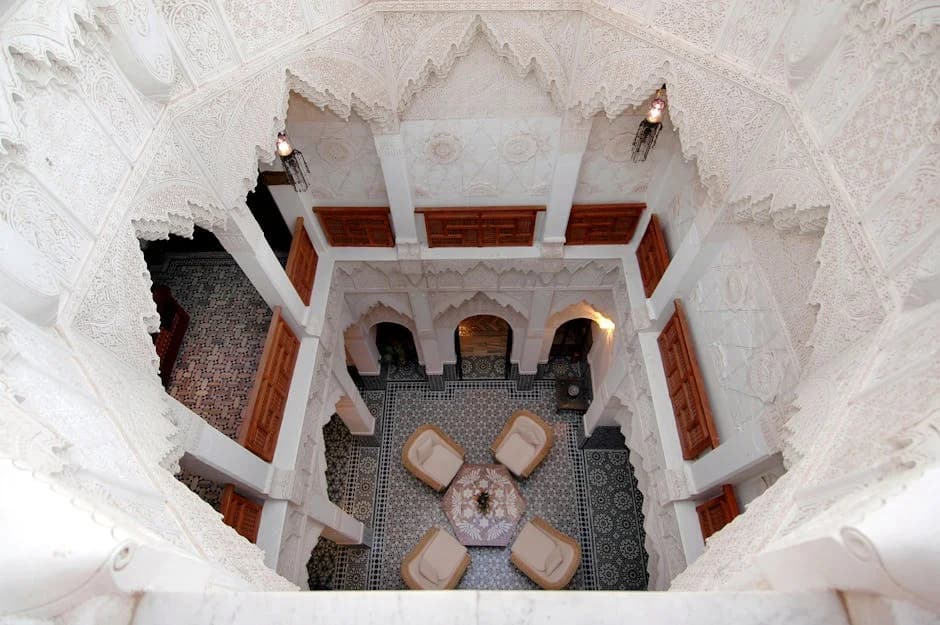
Staying in a riad means stepping into a hidden world behind unmarked wooden doors. These traditional Moroccan houses center on an open-air courtyard, often with a fountain, intricate zellige tilework, and a rooftop terrace for mint tea at sunset.
Many riads have only a handful of rooms, so you get a level of personal attention no hotel can match. For families, a riad with a ground-floor suite and a plunge pool makes all the difference, and our guide to Marrakech with kids highlights the most welcoming options.
Pro Tip
Book directly with the riad rather than through large booking platforms. You’ll often secure a better rate, get a more personalized experience, and ensure your money goes straight to the local owners rather than corporate commissions.
Booking a riad directly through its own website or a quick phone call almost always gets you a better rate than the big platforms. Owners often throw in extras like a free airport transfer or a homemade breakfast, and you know your money supports the local team who maintain these historic properties.
Hotels and Eco-Lodges for the Conscious Traveler
Modern hotels in the Hivernage and Gueliz districts appeal if you prefer a gym, a pool bar, or a more predictable level of service. A growing number of these properties now source local organic produce, run on solar energy, and filter their own water to cut plastic waste.
Eco-lodges on the city’s outskirts push the concept further, using rammed-earth construction, permaculture gardens, and community-led tours that let you experience rural Berber life without leaving a heavy footprint.
Whichever style you choose, the best accommodation in Marrakech feels like a refuge from the sensory overload outside. Once you’ve settled on your perfect base, it’s time to explore how to get around the city with ease and confidence.
Getting Around: Transportation Tips (Taxis, Buses, Walking)
Mastering transportation is essential for any Marrakech travel guide worth its salt. Navigating the city can feel chaotic at first, but once you understand the rhythm of the streets, getting around becomes an adventure in itself.
For exploring the narrow alleyways of the medina, your own two feet are the best option. For longer journeys or escaping the midday heat, you’ll rely on the city’s two main modes of transport: taxis and buses.
 Save
Save
Taxis: Negotiating Fares and Avoiding Scams
Taxis in Marrakech come in two varieties: the small, cream-colored petit taxis that operate within the city limits, and the larger, often white grand taxis for trips beyond. Petit taxis are metered, but drivers frequently "forget" to turn the meter on, so always insist on the meter or agree on a price before you get in.
A short ride within the medina should rarely cost more than 20 dirhams. If you’re exploring Marrakech alone, you’ll find navigating these interactions much smoother with a few key phrases in French or Arabic, and our solo travel guide offers extra safety tips for solo adventurers.
Pro Tip
Always agree on the fare before getting into a taxi, or insist the driver uses the meter. If they refuse, simply walk away and find another cab,there are plenty.
Public Buses: An Affordable and Sustainable Option
This Marrakech travel guide recommends the public bus system for eco-conscious travelers. The modern, air-conditioned buses run on set routes connecting the medina with the new town and suburbs.
A single journey costs just a few dirhams, and you can pay the conductor on board. While the network can be confusing at first, the official ALSA app provides real-time tracking and route maps, making it easier to plan your trip.
Choosing the bus over a private car reduces your carbon footprint and lets you experience the city like a local.
As any seasoned Marrakech travel guide will tell you, walking remains the most rewarding way to soak up Marrakech’s vibrant street life. Most major attractions within the medina are within a 20-minute stroll of each other, and getting lost in the labyrinthine souks is half the fun.
Just remember to wear comfortable shoes and keep a rough mental map of landmarks like the Koutoubia Mosque to reorient yourself.
Top Attractions and Hidden Gems
A thoughtful Marrakech travel guide does more than list the city’s top attractions. It connects you to the soul of the Red City, revealing how to experience its iconic landmarks and hidden gems in a way that respects local culture and supports the community.
Marrakech’s magnetic pull comes from dizzying contrasts: ancient palaces beside contemporary art galleries, chaotic souks giving way to serene riad courtyards. For the conscious traveler, these sites become living classrooms where you learn about Moroccan craftsmanship and the importance of preserving heritage.
 Save
Save
Iconic Landmarks You Can’t Miss
Jemaa el-Fnaa square is the pulsing heart of Marrakech, a UNESCO-recognized cultural space where snake charmers, storytellers, and food stalls create an unforgettable sensory overload. Arrive in the late afternoon to watch the square transform as the sun sets, and support the performers by tipping generously.
Nearby, the Bahia Palace dazzles with its intricate zellige tilework and tranquil gardens. I always recommend hiring a local guide here, not just for the historical context but because your fee directly supports the community.
The Majorelle Garden, with its electric-blue villa and exotic plants, is another must-see, but book tickets online in advance to skip the long queues and reduce the pressure on this fragile site.
While these landmarks are essential, the real magic of a Marrakech travel guide lies in steering you toward experiences that feel personal and less trampled. The city rewards those who wander beyond the postcard views.
Hidden Gems for the Conscious Traveler
Tucked away in the Mellah, the old Jewish Quarter, you’ll find a different rhythm. The narrow lanes here are quieter, lined with spice shops and the Lazama Synagogue, a beautifully restored testament to Morocco’s multicultural past.
Exploring this area on foot lets you connect with shopkeepers who are often eager to share stories rather than just make a sale. Another overlooked treasure is Le Jardin Secret, a meticulously restored riad garden in the heart of the medina.
Its Islamic garden design demonstrates ancient water conservation techniques that feel remarkably relevant today. Visiting supports the ongoing preservation of traditional Moroccan architecture.
Pro Tip
For a truly authentic souvenir, skip the main souk stalls and head to the Ensemble Artisanal, a government-run cooperative where artisans work on-site and prices are fixed. You’ll find high-quality crafts and know your money goes directly to the makers.
Further off the tourist trail, Tinsmiths Square (Place des Ferblantiers) offers a glimpse of artisans hammering intricate lanterns and tea trays. The rhythmic clanging is a soundtrack to a craft that’s been passed down for generations.
A visit here is a reminder that ethical shopping isn’t just about bargaining fairly; it’s about valuing the skill behind the object. If you’re planning a multi-day trip, consider linking these hidden gems into your itinerary to spread your economic impact across different neighborhoods.
Marrakech Itineraries: 3, 5, and 7 Days
Crafting the perfect Marrakech travel guide means matching your itinerary to your travel style, and more importantly, to the time you have. Whether you’re squeezing a long weekend into a busy schedule or planning a full week of immersive exploration, Marrakech rewards both the swift and the slow.
For the conscious traveler, each day offers a chance to support local artisans, sleep in restored riads, and taste food that tells a story of the land. These itineraries weave sustainability into every step, from the medina’s hidden alleys to the quiet villages beyond the city walls.
 Save
Save
3-Day Itinerary: The Essential Marrakech
A 3-day Marrakech itinerary packs a concentrated burst of sensory overload and cultural connection. Start your first morning in the medina, getting intentionally lost among the souks while seeking out cooperatives where artisans set fair prices and share their craft.
Afternoons are for architectural wonders like the Bahia Palace and the Saadian Tombs, but I always recommend ending the day on a rooftop terrace with a glass of mint tea, watching the sun set over the Koutoubia Mosque. On day two, dive into a cooking class that sources ingredients from a local organic farm,it’s a far more rewarding experience than a standard tourist meal.
Your final day is perfect for a half-day trip to the Ourika Valley, where you can hike to waterfalls and share a tagine with a Berber family in a village homestay. This compact itinerary leaves you with a deep appreciation for the city’s rhythms without rushing through its soul.
5 and 7-Day Itineraries: Deeper Immersion
Extending your stay to five days unlocks a slower pace and more meaningful connections that most Marrakech travel guides only hint at. Beyond the medina, you can spend a morning in the Mellah, the old Jewish Quarter, where the spice souk still feels authentic and the quiet streets tell a different side of Marrakech’s history.
A full-day excursion to the Atlas Mountains is non-negotiable: trek through Imlil Valley with a local guide who can explain the irrigation systems and walnut groves, then lunch on a terrace overlooking terraced fields. Back in the city, book a hammam at a women-run cooperative that reinvests profits into community education.
The extra time also lets you explore the contemporary art scene in Gueliz and shop for vintage Berber rugs at a fair-trade boutique, ensuring your souvenirs carry a clean conscience.
With a full week, your Marrakech travel guide transforms into a regional adventure. After covering the city highlights and Atlas day trip, dedicate two days to the coast.
Essaouira’s windswept medina, artisan woodworkers, and fresh seafood make it a perfect counterpoint to Marrakech’s intensity. Alternatively, head to the Agafay Desert for a night in a solar-powered eco-camp, where stargazing replaces city noise.
On your final day, revisit your favorite souk stalls to purchase the pieces you couldn’t stop thinking about, and perhaps join a sunrise yoga session in a riad courtyard. Seven days gives you the luxury of serendipity: the chance to follow a recommendation from a shopkeeper, to sit and sketch in a garden, and to leave knowing you’ve traveled with intention.
Food & Drink: Where to Eat and What to Try
No Marrakech travel guide would be complete without diving into the city’s legendary food scene. The aromas of cumin, saffron, and grilled meats drift through the medina, pulling you toward steaming tagines and freshly baked khobz.
For the conscious traveler, eating well means more than just flavor,it’s about supporting small, family-run eateries and choosing dishes made with locally sourced ingredients. Skip the overpriced tourist menus and follow the locals to discover where the real magic happens.
Must-Try Dishes and Street Food
Moroccan cuisine is a tapestry of Berber, Arab, and Andalusian influences, and Marrakech offers some of the country’s finest examples. Start with a slow-cooked tagine, the iconic clay-pot stew that comes in endless variations,lamb with prunes, chicken with preserved lemon, or vegetable with olives.
Couscous, traditionally served on Fridays, is fluffy semolina topped with tender meat and caramelized onions. For a sweet-and-savory experience, try pastilla, a flaky pigeon pie dusted with cinnamon and powdered sugar.
| Dish | Description | Where to Try |
|---|---|---|
| Tagine | Slow-cooked stew with meat or vegetables, flavored with spices like saffron and ginger | Most traditional restaurants and street stalls |
| Couscous | Steamed semolina grains served with a savory broth, vegetables, and meat | Local eateries, especially on Fridays |
| Pastilla | Flaky pastry filled with pigeon or chicken, almonds, and eggs, topped with cinnamon and sugar | Riad restaurants and specialty bakeries |
| Harira | Hearty tomato-based soup with chickpeas, lentils, and herbs, often eaten to break the fast | Street stalls and cafes, particularly during Ramadan |
Street food in Marrakech is an adventure all its own. Head to Djemaa el-Fna after sunset and you’ll find rows of stalls serving everything from spicy merguez sausages to steaming bowls of harira soup.
Don’t miss the snail vendors, where you can sip the peppery broth straight from the shell. Stick to stalls with high turnover and a crowd of locals,that’s your guarantee of freshness and authenticity.
Where to Eat: From Riads to Rooftops
Some of the best meals in Marrakech happen inside the city’s riads, where dining feels like a private dinner party. Many riad restaurants source ingredients from their own gardens or nearby farms, aligning perfectly with a sustainable travel ethos.
You’ll often eat in a candlelit courtyard or on a rooftop terrace, with a set menu that changes daily based on what’s fresh.
Rooftop terraces are another highlight, offering panoramic views of the medina and the Atlas Mountains while you dine. Places like Nomad and Le Jardin have earned loyal followings for their modern takes on Moroccan classics, but don’t overlook the humble rooftop spots above spice shops and hammams.
A glass of mint tea and a plate of briouats tastes even better with the sunset call to prayer echoing around you.
Pro Tip
The best meals are often found down quiet alleys where you see locals eating. Avoid restaurants with picture menus and aggressive touts, because they rarely serve authentic food.
Hammam Experiences: Types, Etiquette, and Prices
Stepping into a hammam ranks among the most authentic rituals you can experience in Marrakech. It’s a cleansing tradition that goes far beyond a simple bath, blending steam, exfoliation, and deep relaxation.
For the conscious traveler, choosing the right type of hammam also means considering sustainability and cultural respect.
 Save
Save
Types of Hammams in Marrakech
Local neighborhood hammams offer the rawest, most affordable immersion. These are where residents go weekly, and the atmosphere is communal and unpretentious.
Spa hammams inside riads or dedicated wellness centers provide a curated middle ground, with private treatment rooms and organic products. Luxury hotel hammams, often part of a larger spa, deliver a polished, pampering session with marble interiors and multi-step rituals.
| Type | Typical Price | Experience | Etiquette Notes |
|---|---|---|---|
| Public / Local | 10-50 MAD | Communal, authentic, basic amenities | Bring your own soap and glove; modest swimwear required |
| Spa / Riad | 150-400 MAD | Private, tranquil, often includes massage | Booking recommended; towels and products provided |
| Luxury Hotel | 400-800+ MAD | Opulent, multi-step ritual, premium products | Full-service; tipping expected for attendants |
Etiquette and What to Expect
Most hammams follow a similar flow: you’ll undress to underwear or a swimsuit, then move through warm, hot, and cool rooms. A tellak or attendant scrubs your skin with a rough kessa glove, using black soap made from olive oil.
Surrender to the process and don’t rush. A common mistake is skipping hydration before and after, which can leave you lightheaded in the steam.
Pro Tip
Don’t shave or exfoliate your skin the day before a hammam. The scrubbing will be intense on freshly irritated skin and can cause discomfort.
Prices vary widely depending on the venue. A basic public hammam entry might cost as little as 10 MAD, while a private spa package with argan oil massage can reach 500 MAD or more.
Always confirm what’s included: some places charge extra for the glove, soap, or towel rental. Tipping your attendant is customary, usually 20-50 MAD for good service.
Shopping in the Souks: A Bargaining Guide
Wandering through the labyrinthine souks of Marrakech feels like stepping into a living tapestry of color, scent, and sound. Every stall overflows with hand-stitched leather, hammered brass lanterns, and mountains of spices that perfume the air.
For the conscious traveler, this isn’t just a shopping trip,it’s a chance to support local artisans and bring home pieces with real stories behind them. This Marrakech travel guide will help you navigate the art of bargaining with confidence and heart.
The Art of Bargaining
Bargaining in the souks isn’t a confrontation; it’s a social dance that both buyer and seller expect. The first price quoted is rarely the real one,it’s an opening invitation to negotiate.
Start by showing genuine curiosity about the item, ask how it was made, and let the seller see you’re not in a rush. A friendly smile and a bit of humor go a long way.
When you’re ready to make an offer, aim for about a third of the initial asking price, then expect to meet somewhere in the middle.
{{SECTION_11_CALLOUT_1}}
Many first-time visitors make the mistake of bargaining too aggressively or walking away too soon. Remember that the goal isn’t to "win" but to reach a price that feels fair to both of you.
If the seller won’t budge below a certain point, it’s okay to politely decline and move on,there are dozens of stalls selling similar wares. Paying a few extra dirhams often means you’re directly supporting a family-run workshop, not a faceless chain.
What to Buy and Ethical Shopping
Choosing what to buy is just as important as how you bargain. Look for cooperatives and small workshops where artisans work on-site,you’ll often find higher quality and more transparent pricing.
Handwoven Berber rugs, argan oil from women’s cooperatives, and ceramic tagines are all authentic souvenirs that carry the spirit of Morocco. Avoid mass-produced trinkets that flood the market; they rarely benefit the local economy in a meaningful way.
Instead, let your purchases reflect the values of this travel guide: intentional, ethical, and deeply connected to the place.
Souk shopping becomes a richer experience when you see it as cultural exchange rather than a transaction. Take time to chat with vendors, learn a few words of Darija, and never feel pressured to buy.
The memories you collect,of laughter shared over mint tea, of a craftsman’s pride in his work,will outlast any object. Now that your bags are full of treasures, it’s time to understand the rhythms of daily life here, starting with the cultural etiquette that opens every door.
Cultural Etiquette and Dress Code
Respecting local customs isn’t just polite,it’s the foundation of any meaningful Marrakech travel guide. The city welcomes millions of visitors each year, and small gestures of cultural awareness go a long way toward creating genuine connections.
For the conscious traveler, understanding etiquette transforms a simple trip into a respectful exchange. A little preparation helps you navigate social situations with confidence and grace.
 Save
Save
General Etiquette and Social Norms
Greetings in Morocco are warm and often involve a handshake or a light touch to the heart after shaking hands. Using your right hand for eating, passing objects, and greeting is essential, as the left hand is traditionally considered unclean.
When entering a shop or a riad, a cheerful ‘Salam alaikum’ (peace be upon you) is always appreciated, even if your pronunciation isn’t perfect. I’ve found that this simple phrase immediately softens interactions and shows you’re making an effort.
Photography requires extra sensitivity, especially in the medina. Always ask permission before photographing people, particularly women and artisans at work.
Some locals may expect a small tip in return, so keep a few dirhams handy. During Ramadan, be mindful that eating, drinking, or smoking in public during daylight hours is disrespectful to those fasting.
Many cafes remain open discreetly, but it’s best to consume food and drinks out of sight.
Dress Code: What to Wear in Marrakech
Marrakech is a conservative city, and dressing modestly shows respect for local values while also keeping you comfortable in the heat. For women, this means covering shoulders, cleavage, and knees.
Loose-fitting linen trousers, maxi skirts, and lightweight long-sleeve blouses are ideal. Men should avoid walking shirtless or in very short shorts, even in summer.
Light, breathable fabrics like cotton and linen are your best friends, and they help you blend in rather than stand out as a tourist.
When visiting mosques or religious sites, the dress code becomes stricter. Women should carry a scarf to cover their hair, and both men and women need to cover their arms and legs completely.
The Koutoubia Mosque, for example, does not permit non-Muslims inside, but you can still admire its exterior while dressed respectfully. Even in riads and upscale restaurants, Moroccans tend to dress smartly in the evenings, so packing one slightly dressier outfit is a good idea.
Pro Tip
Always carry a lightweight scarf or pashmina. It serves multiple purposes: covering your head in mosques, protecting your shoulders from the sun, and even doubling as a dust mask on windy days. This one accessory solves countless etiquette dilemmas effortlessly.
Adopting these cultural norms not only enriches your experience but also aligns with the conscious traveler’s commitment to responsible tourism. Once you’ve got the etiquette down, the next step is packing the right gear,and our packing list covers every essential for a respectful and comfortable journey.
Packing List for Marrakech
A well-planned packing list for Marrakech makes all the difference between a comfortable trip and one filled with unnecessary stress. The city’s climate shifts dramatically from crisp mornings to warm afternoons, and cultural norms call for thoughtful clothing choices.
Conscious travelers will also want to pack items that reduce waste and support local communities. Getting your suitcase right means you can focus on the sensory overload of the souks, the call to prayer echoing through the medina, and the taste of fresh msemen at a street stall.
 Save
Save
Clothing Essentials for Every Season
Lightweight, breathable fabrics like linen and cotton are your best friends in Marrakech. Long sleeves and loose trousers protect your skin from the sun while respecting local dress codes, especially when visiting mosques or more traditional neighborhoods.
A light scarf or pashmina serves double duty as a shoulder cover and a shield against the evening breeze. Even in summer, bring one warm layer because rooftop dinners can get surprisingly chilly after sunset.
Comfortable walking shoes with good grip are non-negotiable for navigating uneven medina alleys.
Conscious Packing: Sustainable and Ethical Choices
Packing with purpose aligns perfectly with a conscious Marrakech travel guide mindset. A reusable water bottle with a built-in filter lets you avoid single-use plastics and drink safely from local taps or refill stations.
Tuck in a foldable tote bag for market purchases so you can politely decline plastic bags from vendors. Solid toiletries like shampoo bars and toothpaste tablets cut down on liquids and packaging waste while being kinder to Morocco’s water systems.
Finally, leave a little space in your luggage for handmade souvenirs that directly support artisan cooperatives rather than mass-produced trinkets. With these packing tips, you’ll step into Marrakech ready to explore its vibrant streets and serene riads with confidence.
Staying Safe: Health, Safety, and Solo Travel Tips
No Marrakech travel guide would be complete without addressing the practicalities of staying healthy and secure. For the conscious traveler, safety isn’t just about avoiding petty crime,it’s about navigating cultural norms with respect and foresight.
Most visits pass without incident, but a few smart habits can make all the difference.
 Save
Save
Health and Safety Essentials
Stomach upsets are the most common complaint among visitors, so treat tap water as off-limits and stick to sealed bottled water. Even when brushing your teeth, use filtered or bottled water.
Many eco-conscious riads now provide refillable filtered water stations, cutting down on plastic waste while keeping you hydrated. Street food is a highlight, but choose stalls with high turnover and piping-hot dishes.
Pharmacies are well-stocked and pharmacists often speak French or English, so don’t hesitate to ask for advice on minor ailments. Heat exhaustion sneaks up fast in summer months, so plan sightseeing for early mornings and carry a reusable water bottle everywhere.
Solo Travel Tips
Solo travel in Marrakech is deeply rewarding, offering the freedom to wander at your own pace. Dress conservatively to blend in and avoid unwanted attention, especially in the medina.
Always use official petit taxis or ride-hailing apps after dark, and share your itinerary with someone back home.
Pro Tip
Always carry a small amount of cash in a separate pocket for unexpected tips or small purchases. This avoids flashing your wallet in crowded areas and keeps transactions smooth.
Staying in a traditional riad where the host knows your face adds a layer of security that large hotels can’t match, and it supports the local economy directly. With these precautions in place, you’re free to focus on the city’s magic,and your next step is to explore its sustainable side.
Sustainable Travel in Marrakech
Any modern Marrakech travel guide must address the growing demand for conscious tourism. The city’s rapid popularity has strained resources, but a quiet revolution is underway.
Local entrepreneurs are reimagining hospitality with solar-powered riads, zero-waste kitchens, and community-led tours. Choosing these options transforms your visit from a passive holiday into an active contribution.
 Save
Save
Eco-Friendly Stays and Riads
Traditional riads already embody sustainability with their central courtyards and thick walls that naturally cool interiors. Several properties now push further, using greywater recycling and sourcing all energy from rooftop panels.
I’ve stayed in a restored riad in the Mouassine district where breakfast was entirely plastic-free and the staff were trained in heritage preservation. That kind of thoughtful operation makes a tangible difference without sacrificing comfort.
Ethical Shopping in the Souks
Navigating the souks with a conscious mindset shifts bargaining from a sport to a respectful exchange. Artisan cooperatives, especially those run by women, ensure fair wages and preserve crafts like hand-stitched babouches and naturally dyed textiles.
Look for the "Label Artisanal" certification or simply ask vendors where items were made. A leather pouf that costs a bit more often supports an entire family workshop rather than a mass-production middleman.
Small daily habits amplify your positive impact. Carry a reusable water bottle to refill at the growing number of filtered stations, decline plastic bags, and choose walking or cycling over taxis when exploring the medina.
These choices weave sustainability into every moment of your trip, leaving you with memories that feel as good as they look.
Photography Guide: Best Spots and Golden Hour
Capturing the soul of Marrakech through a lens demands more than just a good camera. The city’s pink-hued walls, intricate tilework, and bustling street life offer endless visual stories, but timing and location make all the difference.
A thoughtful marrakech travel guide always includes photography advice because the light here behaves unlike anywhere else. Morning and late afternoon transform ordinary scenes into something almost magical, especially when you respect the people and places you’re photographing.
 Save
Save
Iconic Photography Spots in Marrakech
Jemaa el-Fna square at dusk delivers pure cinematic energy. Smoke rises from food stalls, storytellers gather crowds, and the Koutoubia Mosque looms in the background.
For a quieter frame, head to the Bahia Palace early, right when doors open. The empty courtyards and zellige details let you compose without tourists in every shot.
Don’t overlook the Mellah district either. Its faded spice markets and narrow alleys hold a gritty, authentic charm that contrasts beautifully with the polished riads.
Mastering Golden Hour in the Red City
Golden hour in Marrakech hits differently because the city’s rammed earth walls already glow warm. About 45 minutes before sunset, the light turns buttery and soft, perfect for rooftop shots.
Find a terrace café in the medina, order mint tea, and wait. The angle of light rakes across the souk rooftops, creating depth and long shadows.
If you’re shooting portraits, position your subject so the sun backlights them, then expose for the skin. The result is a halo effect that feels intimate, not staged.
Early risers get a second golden window. Dawn light over the Atlas Mountains, seen from a rooftop near Bab Doukkala, paints the city in pastel tones.
This is when you’ll capture Marrakech at its most peaceful, long before the day’s chaos begins. Remember to keep your gear minimal and your presence unobtrusive.
The best images come from blending in, not from demanding attention.
Nightlife: Rooftop Bars, Clubs, and Evening Activities
Marrakech transforms after sunset, trading the daytime heat for a cooler, more relaxed energy. No Marrakech travel guide would be complete without exploring the city’s after-dark scene, which offers far more than just loud clubs.
From serene rooftop terraces to traditional storytelling performances, the evening hours reveal a different side of the Red City. Conscious travelers will find plenty of options that align with sustainable values, supporting local artisans and family-run venues over international chains.
 Save
Save
Rooftop Bars with a View
Rooftop bars are the heart of Marrakech nightlife, and they range from chic lounges to hidden gems above the souks. Many of these terraces prioritize locally sourced ingredients for their cocktails and snacks, reducing food miles and supporting nearby farms.
One standout is the terrace at Nomad, which uses seasonal produce from the Ourika Valley. Arriving just before sunset lets you watch the sky turn pink over the Koutoubia Mosque while enjoying a glass of Moroccan wine.
Pro Tip
Many rooftop bars add a service charge to the bill, but it’s not always passed to the staff. To ensure your tip reaches the server, ask directly or leave cash on the table.
For a quieter evening, seek out smaller riad rooftops that welcome non-guests for dinner and drinks. These spots often have just a handful of tables and a more intimate atmosphere, perfect for solo travelers or couples.
Le Jardin Secret offers a peaceful courtyard setting, but its rooftop café is a hidden treasure with views over the medina’s rooftops. Booking ahead is wise, as space is limited.
Clubs and Late-Night Entertainment
Marrakech’s club scene is concentrated in the Hivernage district, where venues like Theatro and 555 Famous Club draw international DJs and a dressed-up crowd. While these spots are undeniably glamorous, they can feel disconnected from local culture.
For a more authentic night out, look for live music venues in Gueliz that feature Gnawa or Amazigh bands. These performances offer a deeper connection to Morocco’s musical heritage and often support local musicians directly.
Evening activities extend beyond bars and clubs. The Djemaa el-Fna square comes alive at night with storytellers, henna artists, and food stalls, though it’s important to engage ethically,agree on prices beforehand and avoid exploitative animal performances.
A nighttime stroll through the Mellah or a horse-drawn carriage ride around the city walls provides a low-impact way to soak up the atmosphere. Many tour operators now offer guided night walks that focus on history and architecture, a great alternative for those who prefer a quieter pace.
Day Trips from Marrakech
No Marrakech travel guide would be complete without exploring the stunning landscapes just beyond the city. Day trips offer a perfect escape from the medina’s intensity, revealing the diverse beauty of Morocco.
For the conscious traveler, these excursions become more than sightseeing,they’re opportunities to support rural communities and tread lightly. From the High Atlas peaks to the Atlantic coast, each journey holds a different story.
 Save
Save
Choosing the right day trip depends on what kind of experience you’re after. Some travelers crave mountain air and hiking trails, while others want coastal breezes and fresh seafood.
The best day trips from Marrakech let you connect with local culture in a way that feels genuine, not staged. A little research into who runs the tours and where your money goes makes a big difference.
| Destination | Distance & Time | Highlights | Conscious Travel Tip |
|---|---|---|---|
| Ourika Valley | 60 km, 1.5 hours | Lush valleys, Berber villages, waterfalls | Support women’s argan cooperatives along the route. |
| Essaouira | 180 km, 2.5 hours | Windswept beaches, medina, fresh seafood | Eat at restaurants sourcing from local fishermen and avoid overfished species. |
| Ait Ben Haddou | 190 km, 3 hours | UNESCO-listed ksar, desert landscapes | Hire a local guide from the village to learn about preservation efforts. |
Booking through a local cooperative or a small group operator often leads to more meaningful encounters. These day trips not only enrich your Marrakech travel guide experience but also help preserve the very landscapes you came to see.
Whether you’re watching the sunset over ancient kasbahs or sharing mint tea with a Berber family, the memories will stay with you long after you return to the Red City. Next, we’ll look at how to balance your budget with these unforgettable escapes.
Marrakech on a Budget vs. Luxury
Marrakech embraces every traveler with open arms, whether you arrive with a shoestring budget or a limitless expense account. The city’s magic doesn’t discriminate by price point, but the way you experience it shifts dramatically.
A conscious Marrakech travel guide reveals that both ends of the spectrum offer paths to sustainability and authenticity, not just comfort or cost.
 Save
Save
Budget-Friendly Marrakech: Affordable and Conscious
Traveling Marrakech on a budget often leads to the most immersive encounters. Dorm beds in eco-minded hostels or family-run riads in the medina cost a fraction of luxury stays and keep your money within the local community.
Street food stalls serve steaming bowls of harira and freshly fried msemen for pocket change, and you support micro-economies with every bite. Ethical shopping in the souks becomes a joyful challenge when you bargain respectfully, knowing that a few extra dirhams mean little to you but everything to the artisan.
Even on a tight budget, you can hire a local guide for a half-day walking tour that reveals hidden courtyards and rooftop views far from the tourist crowds.
Luxury Marrakech: Indulgence with a Conscience
Luxury travel in Marrakech doesn’t have to abandon its soul. High-end eco-lodges like the Fellah Hotel or the palatial Royal Mansour invest in solar energy, organic gardens, and fair-wage employment.
Private guides can whisk you away to the Ourika Valley before dawn, avoiding the midday rush and ensuring your visit leaves no trace. Fine dining restaurants increasingly source from local cooperatives, turning a lavish meal into a direct investment in the region’s food sovereignty.
Your Marrakech travel guide might highlight a spa day at a traditional hammam that uses locally produced argan oil and black soap, blending pampering with purpose.
Blending budget and luxury often creates the most memorable Moroccan adventure. Splurge on one unforgettable riad stay and balance it with days of street food exploration and free medina wandering.
The conscious choice isn’t about how much you spend but where your money flows. Whether you’re pinching dirhams or indulging in five-star service, let your trip reflect the values that matter most.
FAQ
Is Marrakech safe for solo female travelers?
Marrakech is generally safe for solo female travelers who take common-sense precautions. Dress modestly, avoid isolated alleys at night, and ignore unwanted attention rather than engaging. Many women travel alone here without incident, and staying in a riad with a responsive host adds an extra layer of comfort.
Do I need to tip in Marrakech, and how much?
Tipping is expected for most services. For restaurant meals, 10% is standard if service isn’t included. Give small change to parking attendants, luggage helpers, and hammam staff,usually 5 to 20 dirhams depending on the help. Tour guides and private drivers appreciate 100 to 200 dirhams per day.
What’s the best way to get from the airport to the medina?
The easiest option is a petit taxi from the official rank just outside arrivals. Agree on a price before getting in,expect around 70 to 150 dirhams depending on your riad’s location and your bargaining. Some riads arrange airport transfers, which is hassle-free if you’re arriving late or nervous about navigating.
Can I drink tap water in Marrakech?
Tap water is technically treated, but most visitors stick to bottled or filtered water to avoid stomach upsets. Brushing your teeth with tap water is usually fine, but for drinking, buy sealed bottles or use a reusable bottle with a built-in filter. Many eco-conscious riads now provide filtered water stations.
What currency should I bring, and are ATMs reliable?
The local currency is the Moroccan dirham, a closed currency you can only get inside the country. ATMs are widespread in Gueliz and near Jemaa el-Fna, but they sometimes run out of cash on weekends. Bring a backup card and some euros or pounds to exchange at a bureau de change as a safety net.
What should a Marrakech travel guide include for a first-time conscious traveler?
A thoughtful Marrakech travel guide should highlight ethical shopping practices, locally owned accommodations, and ways to reduce plastic waste. It should also cover cultural norms, bargaining etiquette that respects artisans, and lesser-known neighborhoods beyond the main tourist circuit. The goal is to help you enjoy the city while leaving a light footprint.
Share this article


Staff Writer
adminRelated Articles

5 Colorful Towns in Portugal You Must Visit
Discover 5 colorful towns in Portugal hidden from tourist crowds. From Monsaraz to Piódão, explore vibrant villages with authentic local charm. Plan your trip now!

7 safest caribbean islands
Discover the 7 safest Caribbean islands with crime data, hurricane risk, and traveler-specific tips. Plan your secure vacation with confidence today!
Italy travel guide for families with kids
Traveling to Italy with children? Get expert tips on kid-approved attractions, stroller-friendly routes, and family hotels. Make unforgettable memories!
Italy Travel Guide
Plan your dream Italy trip with our ultimate guide. Insider tips, budget breakdowns, cultural dos and donts, month-by-month advice. Avoid tourist traps! Start planning.