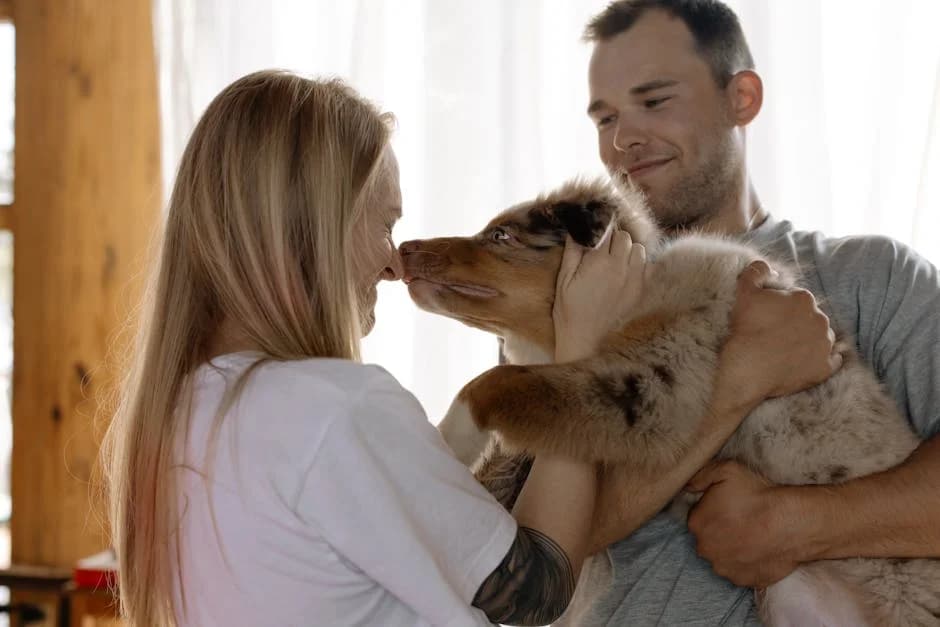
A multi-species guide to decoding your pet’s affection, backed by science and practical observation, with a love languages framework and troubleshooting for owners who feel unloved by their pet.
You catch your dog gazing at you with soft eyes, or your cat curls up on your lap after a long day. In those quiet moments, a question flickers: does my pet actually love me, or am I just the source of food and shelter?
Learning how to tell if your pet loves you isn’t about wishful thinking. It’s about decoding the real, observable signals that animals use to express trust, attachment, and affection.
And the answer varies far more than most people realize.
A dog’s enthusiastic tail wag and a rabbit’s gentle tooth purr might look nothing alike, but both are honest declarations of bonding. This guide bridges the gap between human expectation and animal reality.
Drawing on behavioral science and the concept of pet love languages, we’ll walk through the specific signs of affection in dogs, cats, birds, and small mammals. You’ll also find a practical framework for distinguishing genuine love from learned food-seeking behavior, plus troubleshooting advice for those moments when your pet seems distant.
By the end, you’ll see your companion’s actions through a clearer, more confident lens.
The Science of Pet Love: Oxytocin, Dopamine, and Bonding
When you wonder how to tell if your pet loves you, the answer isn’t just in tail wags or purrs. It’s rooted in a powerful biochemical loop that evolved over thousands of years.
Scientists have found that when you gaze into your dog’s eyes or stroke your cat’s fur, both your brain and your pet’s brain release oxytocin. This same hormone bonds human mothers to their infants, and it works cross-species too.
A 2015 study in Science showed that mutual gazing between dogs and owners raised oxytocin levels in both, creating a feedback loop of attachment. That warm, fuzzy feeling isn’t just emotional,it’s neurochemical.
 Save
Save
Dopamine adds another layer to pet affection. Your pet’s brain releases this feel-good neurotransmitter when they anticipate something rewarding,like your arrival home or the sound of the treat bag.
Over time, they associate you with that pleasurable rush, which reinforces their desire to be near you. This isn’t simple food motivation; brain scans of dogs show their reward centers light up more for their owner’s scent than for any other stimulus.
The anticipation of your presence becomes a reward in itself, proving that their love goes beyond basic conditioning.
These biological systems didn’t develop in a vacuum. Domestication shaped animals to be hypersensitive to human social cues, making them uniquely capable of forming deep bonds.
A cat’s slow blink, for example, triggers a similar oxytocin release as a dog’s gaze. If you want to explore the subtle ways cats express affection, you’ll find that the same science applies across species.
Recognizing these chemical signals helps you see that your pet’s love is as real as any human connection,just expressed in their own language.
How Dogs Say ‘I Love You’
Dogs don’t send text messages or buy flowers, but they have their own unmistakable ways of saying ‘I love you.’ Learning how to tell if your dog loves you starts with recognizing the subtle and not-so-subtle signals they use every day. One of the most powerful is eye contact.
When your dog gazes into your eyes, both of your brains release oxytocin, the same bonding hormone that strengthens human relationships. That soft stare isn’t just curiosity , it’s a chemical declaration of trust and affection.
 Save
Save
<h3>Physical Displays of Affection</h3>
Physical closeness is a dog’s primary love language. Many dogs lean their full weight against you, which is essentially a full-body hug.
Licking your hands or face isn’t just about tasting salt , it’s a grooming behavior that strengthens pack bonds. Some dogs even steal your clothes because your scent comforts them when you’re away.
These tactile gestures are among the clearest signs of affection. While dogs express love through touch, other animals have their own methods.
For example, rabbits show fondness through gentle nudges and grooming, which you can explore in our guide to how to tell if your rabbit loves you.
<h3>Behavioral Signs of Bonding</h3>
Beyond physical contact, dogs demonstrate love through their actions. A dog that checks in on you during a walk or in a new environment is making sure you’re nearby , a protective instinct rooted in pack mentality.
The direction of a tail wag also matters: research shows that wagging more to the right indicates positive emotions, especially when you’re around. Excitement when you return home, even if you’ve only been gone five minutes, is another reliable indicator.
These behaviors aren’t just random; they’re consistent patterns that reveal a deep emotional bond.
Pro Tip
Many owners miss the subtle eyebrow raise. When your dog sees you, they often lift their eyebrows, especially the left one. This involuntary expression is a sign of recognition and affection that’s easy to overlook.
Recognizing these signals is the first step in deepening your bond. But dogs aren’t the only pets with complex emotional lives.
Cats, for instance, show love in ways that are far more understated , from slow blinks to head bunting. Understanding those feline cues is just as rewarding, and the next section covers exactly how to decode them.
How Cats Say ‘I Love You’
Cats have their own love language, and it’s nothing like a dog’s enthusiastic tail wag. Feline affection is subtle, quiet, and often misunderstood.
Learning to read these signals is the real key to how to tell if your pet loves you when that pet is a cat. A cat that adores you will show it through a series of deliberate behaviors that signal trust and comfort.
 Save
Save
<h3>The Slow Blink: A Cat’s ‘I Love You'</h3>
Slow blinking is one of the most powerful signs your cat loves you. In the feline world, closing one’s eyes in the presence of another is a vulnerable act.
A cat that looks at you and slowly shuts its eyes, then opens them again, is essentially saying it trusts you completely. You can return the gesture to strengthen your bond.
Many cat owners report that their cats become visibly more relaxed after a mutual slow-blink session.
<h3>Kneading and Bunting: Physical Affection</h3>
Kneading, often called making biscuits, is a kittenhood behavior that carries into adulthood as a comfort ritual. When your cat presses its paws rhythmically against your lap or a soft blanket, it’s tapping into feelings of safety and contentment.
Head bunting, where a cat rubs its face against you, deposits scent glands and marks you as part of its trusted inner circle. Both behaviors are clear, tactile declarations of love.
Common Mistake
Many owners mistake a cat’s slow blink for drowsiness, but it’s actually one of the clearest signs of feline trust and affection. If your cat looks at you and slowly closes its eyes, it’s saying ‘I feel safe with you.’
Tail language also plays a role. A tail held high with a slight curve at the tip signals a happy, confident cat that is pleased to see you.
Some cats will even wrap their tail around your leg, a gesture akin to a hug. Paying attention to these quiet moments transforms how you interpret your cat’s emotions and deepens your connection.
How Rabbits, Birds, and Small Pets Show Affection
Affection isn’t exclusive to furry four-legged companions. Rabbits, birds, and small mammals like guinea pigs and rats form deep bonds with their owners, but their love languages look nothing like a wagging tail.
Learning how to tell if your pet loves you across these species requires tuning into subtle body language and vocalizations that are easy to miss if you’re not looking for them. The good news is that once you know what to watch for, you’ll see proof of their devotion every day.
<h3>Rabbits: Gentle Nudges and Flops</h3>
Rabbits are prey animals, so showing vulnerability is the ultimate sign of trust. A rabbit that flops onto its side, exposing its belly, is telling you it feels completely safe in your presence.
Binkying, those joyful leaps and twists in mid-air, is another unmistakable expression of happiness and contentment, often directed at a beloved human. When my own rabbit races around the room and then collapses into a flop at my feet, I know that’s his way of saying he’s happy I’m here.
Nudging you with their nose can be a request for attention or a gentle ‘hello,’ but it’s important to distinguish between affection and food-seeking behavior. Sometimes a nudge is simply a polite way of asking for a treat, especially if you’re near the treat jar.
True affectionate nudging often comes with a relaxed body posture and may be followed by a lick or a tooth-purr, a soft grinding sound that indicates pleasure. Learning to read the context helps you know when your rabbit is genuinely expressing love.
{{SECTION_05_CALLOUT_1}}
<h3>Birds and Small Pets: Preening, Chirps, and Cozy Snuggles</h3>
Birds express affection in ways that can seem strange at first. A parrot that gently preens your hair or eyelashes is treating you as part of its flock, a bonding behavior reserved for trusted companions.
Regurgitating food for you might be off-putting, but it’s actually a high compliment in the bird world because it’s how they feed their mates and chicks. Soft chirping, beak grinding, and snuggling against your neck are all signs your bird feels deeply attached to you.
Small mammals like rats, guinea pigs, and hamsters have their own subtle love signals. Rats brux (
Pet Love Languages: Understanding Your Pet’s Unique Style
Learning how to tell if your pet loves you often starts with recognizing their unique love language. Just like people, animals have preferred ways of giving and receiving affection.
The classic five love languages,physical touch, quality time, words of affirmation, acts of service, and gift-giving,translate surprisingly well to the animal world. A dog who leans against your leg values physical touch, while a cat who brings you a toy mouse is speaking the language of gifts.
Tuning into these individual preferences turns everyday interactions into meaningful exchanges.
 Save
Save
Pro Tip
Your pet’s love language is unique to them. Spend a week observing which interactions get the strongest positive response,that’s your key to a deeper bond.
Species tendencies do exist, but they’re only a starting point. Many dogs default to quality time and physical touch, thriving on walks and belly rubs.
Cats often express love through slow blinks and head bunts,a blend of words of affirmation and touch,but some show it by simply being in the same room, a form of quiet quality time. Rabbits might groom you as an act of service, while a parrot who regurgitates food is offering a gift in the most literal sense.
The real magic happens when you look past the breed or species stereotype and see your pet as an individual.
Observation is your best tool. Spend a week noting which interactions make your pet’s eyes soften, their body relax, or their tail wag.
You might discover your cat adores lap time more than treats, or your dog feels most loved during training sessions,an act of service in their eyes. Once you crack the code, you can speak their language fluently, and that’s when the bond deepens from routine care to genuine connection.
Start noticing which gestures get the strongest positive response,that’s your roadmap to their heart.
Love vs. Learned Behavior: Is It Real Affection?
Many pet owners wonder if their companion’s affection is genuine or simply a learned response to treats. The line between love and conditioning can be blurry, especially with food-motivated animals.
Understanding the difference requires looking beyond the obvious tail wags and purrs. It means observing behavior in contexts where no immediate reward is present.
This section will help you distinguish real emotional attachment from cleverly trained responses.
 Save
Save
<h3>When Treats Drive the Behavior</h3>
Food is a powerful motivator for nearly every species. Dogs quickly learn that sitting politely earns a biscuit, and cats master the art of meowing near the food bowl.
These behaviors are not necessarily signs of love,they are conditioned responses reinforced by positive outcomes. If your pet only seeks you out when the treat jar rattles, that’s a red flag.
The affection might be transactional rather than emotional.
One reliable test is to observe your pet’s behavior when no food is involved. Does your dog rest its head on your lap during a quiet evening, or does your cat curl up beside you on the couch without expecting a meal?
Genuine attachment shows up in calm, non-food-related moments. A pet that follows you from room to room simply to be near you is likely expressing something deeper than a desire for snacks.
Pro Tip
A pet that only interacts with you when food is involved isn’t showing love,it’s showing conditioning. True affection persists even when the treat bag is empty.
<h3>When Affection Stands on Its Own</h3>
Real pet love often looks like seeking proximity without any obvious reward. Your dog may choose to sleep at your feet instead of a cozy bed across the room.
Your cat might greet you at the door with a slow blink, a feline sign of trust. These behaviors are not easily trained; they emerge from a sense of safety and emotional connection.
Pay attention to what your pet does when you’re not holding food or toys.
Consistency is another clue that your pet truly loves you. A pet that shows affection randomly or only during specific times of day might be responding to routine cues.
True emotional attachment tends to be steady and resilient. Even after a long day when you have no treats to offer, a loving pet will still seek your company.
That unwavering presence is the hallmark of a bond built on more than just learned behavior.
| Behavior | Likely Motivation |
|---|---|
| Following you to the kitchen | Food-driven |
| Resting head on your lap during TV time | Genuine affection |
| Meowing loudly at 5 p.m. | Learned feeding time |
| Purring while being petted without food present | Emotional bonding |
| Bringing you a toy without prompting | Play/affection mix |
What If Your Pet Doesn’t Seem to Love You?
Feeling like your pet doesn’t love you can be surprisingly painful. Many owners watch videos of dogs wagging their tails or cats purring in laps and wonder why their own animal seems distant.
Before you worry, understand that pets express affection in wildly different ways, and some are simply more subtle than others. Learning how to tell if your pet loves you often means adjusting your expectations to their unique personality and species.
 Save
Save
<h3>Understanding Why Your Pet May Seem Distant</h3>
A pet that appears aloof isn’t necessarily rejecting you. Some animals, like certain cat breeds or rabbits, show love through quiet presence rather than overt displays.
Past trauma or lack of early socialization can also make a pet more reserved. Health issues, from dental pain to arthritis, might cause a pet to withdraw from physical contact.
Even your own behavior can play a role. Too much forced cuddling, loud voices, or inconsistent routines can make a sensitive animal retreat.
Species-specific communication matters too: a parrot that doesn’t want to be touched may still bond deeply through vocal mimicry. The key is to recognize that what looks like coldness is often just a different emotional vocabulary.
Pro Tip
A pet that doesn’t cuddle may still adore you. Cats show trust through slow blinks, and rabbits express contentment by flopping near your feet. Don’t mistake a different love language for indifference.
<h3>How to Strengthen Your Bond With a Reluctant Pet</h3>
Building trust starts with respecting your pet’s boundaries. Give them the space to approach you on their own terms, and reward any voluntary interaction with a gentle treat or soft praise.
Spend quiet time in the same room without demanding attention. This teaches your pet that you’re a safe, predictable presence.
Over weeks, you’ll notice small shifts: a dog leaning against your leg, a bird chirping when you enter, a cat blinking slowly from across the room. These are genuine signs your pet loves you, even if they look different from the tail-wagging stereotype.
Consistency is crucial. Stick to a regular feeding and play schedule so your pet learns to anticipate positive moments with you. Avoid punishment, which can destroy trust, and instead redirect unwanted behaviors calmly.
If progress stalls, consider consulting a veterinary behaviorist to rule out underlying anxiety or pain. With patience, even the most reserved pet can learn to express affection in their own way.
Common Myths About Pet Affection Debunked
When you’re learning how to tell if your pet loves you, it’s easy to latch onto oversimplified signs. A wagging tail, a purr, or a lick might seem like clear declarations of love, but these behaviors can mean many things.
Misreading them can lead to frustration or even missed health cues. Let’s clear up some of the most common myths about pet affection across species.
 Save
Save
<h3>Dog Affection Myths</h3>
The idea that a wagging tail always signals a happy, loving dog is one of the biggest misconceptions. Tail wagging is simply a sign of arousal, which can be positive or negative.
A high, stiff wag often indicates alertness or agitation, not affection. Similarly, face licking isn’t always a kiss.
Dogs may lick to gather information, show submission, or even because they like the taste of salt on your skin. True dog affection shows up in relaxed body language, leaning against you, and seeking proximity without demands.
Common Mistake
A high, stiff tail wag often signals alertness or agitation, not love. Always check the rest of the dog’s body: tense muscles, hard stare, or closed mouth suggest discomfort.
<h3>Cat and Small Pet Myths</h3>
Cats have their own set of misunderstood signals. A purr doesn’t automatically mean contentment.
Cats also purr when they’re in pain, anxious, or even giving birth. The slow blink, however, is a more reliable sign of trust and affection.
For rabbits, a binky, that joyful leap and twist, is a clear expression of happiness, but not every hop means love. Birds might regurgitate food for you, which is a bonding gesture, but it can also be a hormonal behavior that needs management.
The key is context: look for clusters of relaxed, voluntary behaviors rather than isolated actions.
Understanding these nuances helps you see your pet’s true feelings. Instead of relying on myths, observe the whole picture.
In the next section, we’ll explore what to do if your pet doesn’t seem to show affection at all.
FAQ
Do pets actually feel love, or is it just attachment?
Research shows that pets experience a release of oxytocin when interacting with their owners, similar to human bonding. While we can’t know their subjective feelings, the biological markers strongly suggest a form of love. It’s more than just routine attachment; it’s a genuine emotional connection.
How long does it typically take for a pet to bond with a new owner?
Bonding time varies widely by species and individual personality. Dogs may form a strong attachment within weeks, while cats or rabbits might take months to fully trust you. Consistency, patience, and respecting their boundaries are key to speeding up the process.
Can my pet love me if they don’t like physical touch?
Absolutely. Many pets express affection through proximity, eye contact, or simply choosing to be in the same room. For some animals, like certain cats or birds, physical touch isn’t their love language, but they still show deep attachment in other ways.
Is it possible for a pet to love more than one person?
Yes, pets are capable of forming multiple bonds. They may have a primary caregiver but still show affection to other family members. The quality of interaction, not just quantity, determines the strength of each relationship.
What should I do if I feel like my pet doesn’t love me?
First, check if you’re overlooking subtle signs of affection that don’t match your expectations. Then, focus on building trust through predictable routines, positive reinforcement, and letting your pet initiate interactions. Some pets simply have more reserved personalities, and that doesn’t mean they don’t care.
What are the most unmistakable signs that your pet genuinely loves you?
The clearest signs include seeking you out for comfort, relaxed body language in your presence, and engaging in mutual gaze. If your pet consistently chooses to be near you, even when you’re not offering food or play, that’s a powerful indicator of real affection. These behaviors transcend basic needs and reflect a deeper bond.
Share this article


Staff Writer
adminRelated Articles


5 Colorful Towns in Portugal You Must Visit
Discover 5 colorful towns in Portugal hidden from tourist crowds. From Monsaraz to Piódão, explore vibrant villages with authentic local charm. Plan your trip now!

7 safest caribbean islands
Discover the 7 safest Caribbean islands with crime data, hurricane risk, and traveler-specific tips. Plan your secure vacation with confidence today!

Italy travel guide for families with kids
Traveling to Italy with children? Get expert tips on kid-approved attractions, stroller-friendly routes, and family hotels. Make unforgettable memories!

Italy Travel Guide
Plan your dream Italy trip with our ultimate guide. Insider tips, budget breakdowns, cultural dos and donts, month-by-month advice. Avoid tourist traps! Start planning.